How much space is needed for Ferris Wheel hire?
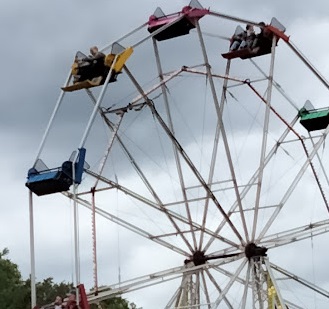
Ferris wheels can require a lot of space; fortunately, they're almost always hired for outdoor use, although our smaller Ferris wheels that are part of our children's funfair rides selection can be used indoors. However, we always need drive-in access, with these fairground rides typically trailer-mounted and requiring full vehicle access for delivery.
It's not just the floor plan you need to think of with Ferris wheels! These rides soar into the sky, and therefore the overhead space needs to be free of obstructions such as tree branches and telegraph cables. The ground at the location should also be level and able to support the weight of the Ferris wheel and its riders.
We have three different Ferris wheels on offer, including:
We Are Tricycle has delivered its funfair rides and fairground attractions all over the UK. We've worked at events ranging from birthday parties to company fun days, and we always bring dynamic and exciting fairground fun, wherever we go.
To speak with us about our Ferris wheel hire services, or anything else we offer, just use the below techniques.
Ferris Wheel Space Is About More Than Its Ground Footprint
When planning Ferris wheel hire, the first question is often how many metres of ground space the attraction needs. That is important, but it is only part of the calculation. Organisers also need to consider height, vehicle access, surrounding operational space, queues, ground conditions and the route the equipment will take to its final position.
The exact requirement depends on the particular wheel being supplied. Our range includes options such as the Vintage Ferris Wheel, Mini Ferris Wheel and Giant Ferris Wheel, so organisers should not assume that dimensions quoted for one attraction automatically apply to another.
Ask for the Dimensions of the Specific Ferris Wheel
There is no single footprint that describes every mobile Ferris wheel. A compact wheel intended for a smaller family event has different spatial requirements from a much larger observation-style attraction.
Before committing to a position, confirm the dimensions and setup requirements of the exact wheel being considered. If you are still deciding which attraction suits your event, How to Choose the Right Funfair Rides & Games provides broader guidance on matching equipment to a venue.
Measure the Usable Space, Not the Size of the Field
A venue may look large on a map while offering much less usable space once buildings, trees, paths, slopes, drainage features, permanent furniture and other event infrastructure are taken into account.
When measuring a proposed Ferris wheel position, identify the clear area that can genuinely be allocated to the attraction rather than using the overall dimensions of the venue.
How to Place Funfair Rides Around the Site looks at this wider site-planning process and can be useful when several attractions need to fit within the same location.
Do Not Forget the Height of a Ferris Wheel
Ferris wheels are unusual among event attractions because vertical clearance can be just as important as ground space. Organisers need to consider what is above the proposed position as well as what surrounds it.
Potential constraints can include trees, overhead structures, building projections and other site-specific obstructions. Taller attractions such as Giant Ferris Wheel naturally require particularly careful consideration of the proposed location.
If you are interested in the mechanics behind the attraction itself, How Does a Ferris Wheel Work? explains the basic operating principles.
The Transport Vehicle Has to Reach the Setup Position
A clear event field is of little use if the equipment cannot reach it. Mobile fairground rides are transported to the venue before they are assembled or positioned for operation, so access forms an important part of the space assessment.
Gate widths, narrow entrances, sharp turns, restricted internal roads and obstacles between the entrance and setup area can all affect feasibility. How Are Funfair Rides Transported? provides more information about this part of the process.
Turning and Manoeuvring Space Can Matter Too
The access route should not be considered as a simple straight line from the road to the attraction position. Depending on the equipment and venue, the vehicle may need sufficient room to approach, manoeuvre and leave the setup area.
This is one reason photographs alone are not always enough to assess a site. Providing accurate measurements, access information and a clear description of the venue can make the planning process considerably more useful.
Setup Space May Differ from the Finished Event Space
The area required while an attraction is being installed is not necessarily identical to the space visitors see once the fairground opens. Equipment has to be positioned, assembled and prepared before public operation begins.
Other contractors should therefore avoid filling surrounding areas before the Ferris wheel installation has been completed. Where several suppliers are working on the same site, the order of installation can be just as important as the final layout.
See How to Assemble and Dismantle Funfair Rides and How to Set Up and Tear Down Funfair Rides for related information about installation logistics.
Allow for the Queue as Well as the Wheel
The physical ride footprint does not account for passengers waiting to use it. A Ferris wheel positioned neatly between two other attractions can still cause problems if there is nowhere sensible for its queue to form.
The waiting area should be considered as part of the attraction zone from the beginning. How to Manage Queues at Funfairs covers queue positioning and visitor movement in more detail.
Where appropriate, crowd barrier fences can also help define entrances and waiting spaces. Our How to Use Crowd Barrier Fencing at Events guide explains their wider role within event layouts.
Leave the Entrance and Exit Easy to Use
Passengers need a clear route into and away from the attraction. Placing another ride, food queue or busy pedestrian route immediately beside the loading area can make an otherwise workable footprint less practical.
When plotting the Ferris wheel on a site plan, treat the entrance, exit and queue as part of the complete attraction rather than drawing only the wheel itself.
A Ferris Wheel Can Influence the Layout of the Whole Event
Because of its scale and height, a Ferris wheel often becomes one of the principal visual features of a funfair. Its position can therefore be chosen strategically rather than purely according to where there happens to be an empty space.
At festival hire, company fun days and corporate events and council and local authority events, a wheel can act as a recognisable point within a much larger venue.
Organisers may therefore want to think about sightlines from entrances, central routes and other important event spaces when deciding where the attraction should sit.
Large and Small Ferris Wheels Suit Different Sites
If the available area cannot accommodate a larger attraction, that does not necessarily mean a Ferris wheel is impossible. Mini Ferris Wheel may suit a very different type of venue from the Giant Ferris Wheel.
The best choice depends on the audience, scale of event, available space and practical access. Our wider Ferris wheels range can help organisers compare appropriate options.
Ground Conditions Need to Be Suitable
Space on a drawing and usable installation space are not always the same thing. The condition and characteristics of the ground can influence where amusement equipment can practically be located.
Slopes, soft surfaces, drainage issues and weather-affected ground should all be raised during the planning process. This becomes particularly important for outdoor events where the site may change considerably after prolonged rain.
How to Prepare Funfairs for Adverse Weather provides wider guidance on weather planning, while Rainy Weather FAQs addresses wet-weather considerations specifically.
Wind Exposure Is Relevant to Tall Attractions
A Ferris wheel's height means weather conditions form part of the wider site assessment. Different locations within the same venue can have different levels of exposure, particularly where an event takes place in a large open space.
Operators will make decisions according to the attraction and applicable operating requirements. Organisers can read How to Keep Funfair Rides Safe in Windy Conditions for more information about the effect of wind on outdoor fairground operation.
Keep Appropriate Routes Around the Attraction
The aim should not be to squeeze a Ferris wheel into the smallest possible rectangle. The surrounding event still needs to function once the attraction is installed.
Pedestrian circulation, neighbouring queues, operational areas and emergency access should therefore remain part of the plan. How to Ensure the Safety of Your Guests at Your Funfair looks at these considerations from the visitor perspective.
Power Provision Needs to Be Included in the Plan
As with other mechanical attractions, the infrastructure required to operate a Ferris wheel should be considered alongside the visible ride. The positioning of power equipment and associated operational infrastructure can influence the most practical location.
How Are Funfair Rides Powered? explains more about fairground power arrangements, while Fairground Electrical Safety Regulations provides related safety information.
Make Sure the Wheel Does Not Compromise Emergency Access
Large attractions should be incorporated into an event's emergency planning rather than considered separately from it. The Ferris wheel, its queue and associated equipment should not unnecessarily obstruct routes that may be needed elsewhere on the site.
How to Plan for Emergencies - Funfair Crisis Management covers advance preparation, while What to Do in a Funfair Emergency looks at the response once an incident is taking place.
Consider What Will Be Positioned Beside the Ferris Wheel
Neighbouring attractions affect whether a location works. A wheel may fit physically but still be poorly positioned if queues from adjacent equipment overlap or if several major attractions compete for the same pedestrian space.
Mixing attraction types can create a more practical layout. fairground side stalls and games, carnival games or event catering solutions have different spatial characteristics from major rides and can be incorporated into the wider plan accordingly.
Think About Seating and Spectator Space
Ferris wheels often attract people who are waiting for friends or family members rather than riding themselves. That can create an informal spectator area around the attraction.
Where the venue permits, nearby picnic benches or Deck Chair Hire can give visitors somewhere more appropriate to wait without standing immediately beside the ride entrance or queue.
The Ferris Wheel Needs to Leave the Site Afterwards
Access requirements continue after the public event ends. Equipment still has to be dismantled, loaded and transported away, potentially while other event infrastructure is also being removed.
A good layout therefore preserves a workable breakdown route instead of allowing later-installed equipment to trap a major attraction within the venue. How Are Funfair Rides Transported? provides more background on the movement of mobile fairground rides.
Send Site Information Before Finalising Your Event Plan
If you are unsure whether a Ferris wheel will fit, provide as much practical information as possible. Useful details can include the proposed location, usable measurements, access widths, surface type, photographs and information about any obvious height or access restrictions.
This allows the particular attraction to be considered against the actual site rather than relying on a generic estimate.
Planning Other Attractions Around Your Ferris Wheel
Once you know where the wheel can be positioned, the rest of the funfair can be planned around it. How to Place Funfair Rides Around the Site provides broader site-layout advice, while How Much Space Is Needed for Dodgems Hire? and How Much Space Do I Need for Giant Garden Games? cover two very different types of event equipment.
You can also browse our Guides for advice covering ride transport, installation, queues, power, weather and event logistics.
If you are considering Ferris wheel hire as part of fairground and funfair hire, contact us with details of your venue and the type of wheel you are interested in. We can then discuss the practical requirements for the specific attraction rather than relying on a one-size-fits-all footprint.