Carousel FAQs | History, Horses, Superstitions & Hire Info
Carousel FAQs
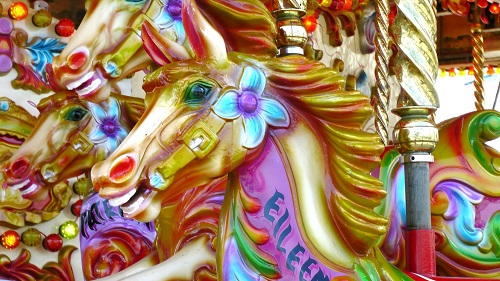
The Carousel is one of the most enchanting fairground rides, loved by children and adults alike. With its brightly painted horses, organ music, and timeless appeal, it has become a symbol of nostalgia and joy at funfairs worldwide. Below you’ll find answers to the most common questions about these magical rides — from their history and design to quirky superstitions and practical hire details.
History & Origins
Where did the carousel come from?
The story goes back centuries, with early versions linked to cavalry training games. Over time, these evolved into entertainment rides with wooden horses and decorative panels. Our guide What is the history of the Carousel dives into the fascinating journey from medieval contests to today’s fairground staple.
For a broader view of how fairgrounds evolved, don’t miss fairground history facts.
Design & Horses
What types of horses are on a carousel?
Horses come in many styles, each with unique names and poses. What are the names of the horses on a carousel explains terms like prancers, jumpers, and standers. These details give each horse a distinct character.
How does the carousel mechanism work?
Behind the magic lies clever engineering. From gears and cranks that create the “up and down” motion to the motors and turntables that power the spin, our deep dive How does a carousel work explores the mechanics in plain English.
Superstitions & Stories
Carousels have long inspired myths and folklore. From haunted horses to good luck rituals, these rides are more than just mechanical wonders — they’re part of storytelling culture. Our feature Carousel superstitions looks at famous tales, from ghostly apparitions to charms for fortune and love.
Quick FAQs
- Are carousels safe for children?
- Yes. They are among the gentlest rides at fairs. Operators enforce height and age rules for smaller riders, and speed is carefully controlled.
- Can a carousel be themed?
- Yes. Panels, horses and lighting can be styled to fit vintage, festive or branded themes — ideal for Weddings, Christmas parties and events, or corporate activations.
- How much space does a carousel need?
- It depends on the model. Traditional Victorian-style carousels require a larger footprint, while compact modern designs fit smaller venues. We’ll advise during your booking process.
- Do you provide operators?
- Yes. Trained attendants run the ride, manage queues, and ensure safety at all times.
Take Your Carousel Questions Further
Carousels have a distinctive place in fairground culture. Their circular movement, decorative appearance and long history make them quite different from many modern amusement rides. If the FAQs on this page have prompted questions about how carousels work, where they came from or how they can fit into an event, these related resources provide the next places to look.
What makes a carousel move?
The movement may look straightforward from outside the ride, but there is more happening mechanically than simply turning a platform. How does a Carousel work? looks more closely at the principles behind the attraction.
If you have wondered about the terminology, What's the Difference Between a Merry-go-Round and a Carousel? explores the names associated with this familiar type of fairground ride.
Trace the carousel back through fairground history
Carousels have a long association with travelling fairs and amusement venues. What is the History of the Carousel? focuses specifically on their development, while Funfair History FAQs place individual attractions within the much wider story of fairground entertainment.
You can also explore What is the History of Fairground Art? for another perspective on the decorative traditions associated with fairgrounds.
Compare the carousel with other traditional rides
A carousel can be one part of a varied traditional fairground rather than the only major attraction. Ferris Wheel FAQs explore another instantly recognisable ride, while Dodgems FAQs move into an attraction where the participants have much more control over the experience.
For a very different style of ride, Rollercoaster FAQs and Thrill Ride FAQs provide routes into faster and more intense fairground attractions.
Planning a carousel as part of a family event?
The audience is an important part of attraction selection. Organisers may be planning for families, children, adults or a mixture of age groups, and the operating requirements of the particular carousel still need to be taken into account.
Funfair Accessibility FAQs explore accessibility and participation in more detail, while How to Keep Children Safe at Fairgrounds provides further guidance for events attended by children.
Where could the carousel sit within the event?
Choosing the attraction is only part of the process. The particular ride needs an appropriate location, suitable access and sufficient operating space, while organisers also need to think about how guests will move between different areas of the venue.
Event Planning and Logistics FAQs explore these wider practical questions. How to Place Funfair Rides Around the Site provides more detailed guidance about incorporating rides into the event layout.
Adding games around a traditional carousel
Traditional games can help develop the wider fairground setting around a carousel and give guests something different to do between rides. Funfair Game FAQs cover side stalls and fairground games, while Giant Game FAQs explore larger participation games.
If the event combines traditional attractions with electronic entertainment, Arcade Game FAQs provide another useful collection.
Using carousels at seasonal events
The visual character of a carousel can make this type of attraction relevant to several seasonal event formats. For winter celebrations, Christmas Funfair FAQs answer questions about combining rides, games and other festive entertainment.
For events during warmer months, Summer Funfair FAQs cover summer-specific planning considerations.
What about testing, safety and weather?
Like other amusement devices, a carousel needs to be considered according to the requirements of the specific equipment and its operating conditions. Organisers should not assume that procedures or limits for one ride automatically apply to another.
Funfair Testing FAQs explore testing and inspection, while Health and Safety FAQs cover the wider safety picture. For outdoor events where changing conditions are a concern, there are also Rainy Weather FAQs.
Continue exploring traditional fairground attractions
Visit the main FAQs section for further collections covering rides, games, event types and practical planning. Our Guides contain more detailed articles about fairground attractions, or contact us to discuss carousel hire and the wider entertainment requirements for your event.