How to Manage Queues at Funfairs
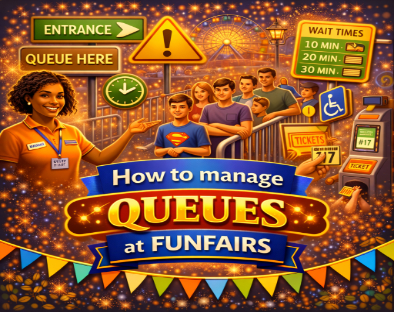
When hosting an event or managing a popular funfair ride, efficient queue management is paramount to ensure attendee satisfaction and maintain a smooth flow of operations. A prolonged or disorganised queue can lead to disgruntlement and mar an otherwise fun day.
Thanks to We Are Tricycle's vast experience in event management, you're in safe hands when you're with us. Here are our top tips for effective queue management:
- If possible, get an estimate of the number of attendees. This will enable you to design your queuing system to handle the projected volume.
- Identify periods when queues might become longer, such as lunchtime or just after doors open, and plan extra resources accordingly.
- Clear, visible signage is pivotal. Indicate the start of the queue, estimated waiting times, and any essential instructions to keep guests informed and reduce uncertainty.
- Rope barriers, cones, crowd barrier fences and retractable belt stands can help delineate the queuing space and guide attendees in the desired direction.
- Having staff members guide and inform the queue can be reassuring for attendees. They can answer queries, manage crowd behaviour, and ensure the queue moves systematically.
- Consider entertaining attendees while they wait. This could be through street performers, screens displaying entertaining content, or even trivia about the funfair ride they're queuing for. A distracted guest perceives a reduced waiting time.
- Digital queue management systems allow guests to join a virtual queue and be alerted when their turn approaches. This frees them to enjoy other aspects of the event until they're summoned.
- For fairground rides and attractions with high demand, consider having multiple service points to distribute the crowd. For instance, multiple ticket counters or entrance gates could work on certain rides.
- Consider offering a priority pass or fast track option for those willing to pay a premium or for special guests. This can also help in crowd differentiation and management.
- Constantly observe the efficiency of your queuing system. If a bottleneck appears, be ready to adapt and make on-the-spot changes.
- Always keep your guests informed. If there are unforeseen delays or changes, use loudspeakers, digital displays, or queue marshals to update attendees.
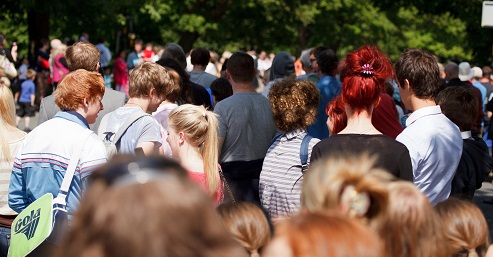
Effective queue management is both an art and a science, striking a balance between logistical planning and understanding human behaviour. With the right strategies, queues can be not just manageable but also a positive aspect of the visitor experience. By implementing these strategies, you ensure that attendees spend less time waiting and more time enjoying the fun.
With We Are Tricycle by your side, you can enjoy effortless funfairs and fairgrounds wherever you want, anywhere in the UK! Contact us to book your spot.
Good Queue Management Starts Before Anyone Lines Up
Queues are not automatically a problem at a busy funfair. In many cases, a healthy queue simply shows that an attraction is popular. The difficulty comes when waiting lines grow without structure, block neighbouring activities or leave visitors unsure about where to stand and how long they may be waiting.
That is why queue planning should begin while the event layout is still being designed. Our guide to How to Place Funfair Rides Around the Site looks at the wider positioning of attractions, while this page concentrates on what happens once guests start gathering around them.
Predict Which Attractions Are Most Likely to Draw a Crowd
Not every part of a funfair creates the same pattern of demand. A headline attraction such as the Giant Ferris Wheel, Modern Dodgems or Pirate Ship may attract a concentrated queue, while smaller fairground side stalls and games can produce shorter bursts of participation throughout the event.
Thinking about likely demand in advance helps organisers allocate enough space around the attractions most likely to become busy. This can be particularly important when combining big funfair rides, family funfair attractions and rides and children's fairground rides and attractions within the same site.
Give Every Queue a Clear Beginning and End
Visitors should be able to understand where they are expected to join a queue without having to ask. Clearly defined entry points can reduce accidental queue-jumping and prevent informal groups from forming around the loading area.
The exit route matters just as much. Guests leaving an attraction should ideally be able to move away without walking back through the people waiting to board. How to Safely Load Funfair Rides provides further information about the boarding stage itself.
Use Crowd Barriers to Shape the Queue, Not Simply Contain It
Barrier fencing can help turn an unstructured crowd into a clear waiting route, particularly around attractions with high throughput. The objective is not to create the longest possible fenced lane. It is to use the available space intelligently while preserving access to surrounding activities.
Our crowd barrier fences can be incorporated into larger event layouts, and How to Use Crowd Barrier Fencing at Events covers their use around pedestrian routes, ride entrances, vehicle areas and operational zones.
Keep Main Walkways Free
One of the easiest ways for a queue to affect an entire event is for it to spread sideways into a main pedestrian route. This can make nearby attractions harder to reach and create confusion for visitors who are simply trying to move through the site.
When planning festival hire, council and local authority events or other high-footfall gatherings, it can be useful to treat major walkways as protected circulation space. Queue areas can then be positioned beside those routes rather than directly within them.
Think About Throughput as Well as Queue Length
Two queues containing the same number of people can behave very differently. Some attractions process guests quickly in short cycles, while others take longer to load and unload. What matters to the visitor is not simply how many people are standing ahead of them, but how quickly the line moves.
This is why queue planning should consider the operating pattern of the individual attraction rather than using the same layout for every ride. Ferris wheels, dodgems, roller coasters and Chair O Planes each create different loading and unloading patterns.
Give Waiting Guests Something Else to Do
A queue can become part of the event experience rather than dead time. Where waiting is likely to be significant, nearby low-footprint activities can keep guests occupied without encouraging them to leave the queue completely.
Our queue busters and waiting area games are particularly useful for this purpose. Depending on the event, organisers could also incorporate Giant Buzz Wire, Catch It - Reaction Ring Game or other compact reaction games in suitable waiting areas.
Food and Seating Can Reduce Pressure on Busy Areas
Not everybody in a group needs to stand in the same queue. At family events, one person may wait while others sit nearby, buy refreshments or use another attraction.
Strategically positioned picnic benches, Deck Chair Hire and relax and chill out zones can create places for accompanying guests to wait without clustering around ride entrances.
Catering can also help distribute people through the site. A separate area containing event catering solutions or food carts and bars encourages visitors to spend time away from the busiest attractions rather than concentrating everyone in one location.
Clear Information Can Prevent Queue Frustration
Waiting often feels longer when visitors do not know what is happening. Where practical, staff can explain temporary delays, operating pauses or restrictions so guests understand why a line has stopped moving.
If a ride cannot accept a particular guest because of a legitimate operating restriction, it is preferable for that information to be visible before they have waited for a long period. Refusing Access to Funfair Rides and Funfair Ride Health Restrictions and the Equality Act provide related guidance on rider suitability and access.
Children's Queues Need Particular Attention
Young children may find long waits difficult, especially during hot weather or very busy family events. Queue routes for children's attractions should therefore be easy for parents and carers to understand, with appropriate space around entrances and exits.
Our How to Keep Children Safe at Fairgrounds guide looks at wider family safety, while How to Help Nervous Children with Funfair Rides may be useful where a child becomes uncertain after reaching the front of a queue.
Weather Can Change the Way People Queue
A queue layout that works well in mild conditions may feel very different during strong sunshine or heavy rain. Organisers should consider whether guests are being left standing for extended periods without access to shade, seating or refreshments.
For summer events, How to Keep Funfairs Comfortable in the Summer covers heat and guest comfort. Rainy Weather FAQs and How to Prepare Funfairs for Adverse Weather provide additional information for less predictable conditions.
Review Queues During the Event Rather Than Assuming the Plan Is Perfect
Even a carefully designed site plan is still a prediction. Actual visitor behaviour may differ once the event opens. One attraction may become much more popular than expected, while another area may remain quiet.
Staff should therefore be prepared to observe crowd movement and make appropriate operational adjustments where possible. This wider approach fits naturally with How to Perform a Funfair Ride Risk Assessment, which explains why event risk management should respond to real conditions rather than existing only as paperwork.
Different Events Produce Different Queue Patterns
The queue at a ticketed corporate event may behave very differently from the queue at a free public festival. School events, university celebrations and community fun days can all have distinct peaks in demand depending on arrival times and the structure of the programme.
We support company fun days and corporate events, school events, university and Freshers' Week events, charity events and many other formats. Queue planning should reflect the actual audience rather than copying a generic layout from another event.
More Help with Funfair Layouts and Visitor Flow
Queue management connects closely with site layout, crowd control and event safety. Useful related reading includes How to Use Crowd Barrier Fencing at Events, How to Ensure the Safety of Your Guests at Your Funfair and Funfair Emergency Planning and Crisis Management.
You can find more practical advice in our Guides section. If you are arranging fairground and funfair hire and would like help choosing attractions or planning how they could work within your venue, contact us.