How to Use Crowd Barrier Fencing at Events
If you're organising an event, there are lots of practical things to consider to make sure every single guest is safe and has an amazing time at your celebration.
You might need to think about crowd barrier fencing at your next big event, and many party organisers use this method to keep everyone safe. Crowd barrier fencing plays an important role at big events, such as festivals, carnivals or local fairground sites.
Even if you know your guests won't be rowdy, these crowd barriers can help you to create separate safe spaces and manage the guests at outdoor and indoor events.
Setting up crowd barriers
When using crowd barrier fencing at your festival or special occasion, you need to consider how to set it up on the day. Set up your fencing the night before your event to make sure you're prepared, and keep an eye on the barriers to make sure they don't get knocked down on the big day.
You may also need to consider the weather and crowd numbers at your event, to understand whether or not you need to invest in a stronger material or use more than one barrier.
Use crowd barrier fencing to create an entrance area at your fairground and encourage guests to head where they need to go. At events with lots of crowds, it can be confusing for guests to know where they need to queue up or where it is safe to stand, and a simple fencing solution can resolve this issue.
These barriers are an essential safety feature at your next crowded event. At funfairs and fairground events, for instance, it is important for guests to keep their distance from big thrill and white knuckle rides so that they are completely safe.
Crowd barrier fencing makes it clear for guests to know where they can safely stand, and these barriers create designated spaces for each ride or attraction at your celebration or event. This is particularly important in the queue line for busy rides or fairground entertainment that swings outwards.
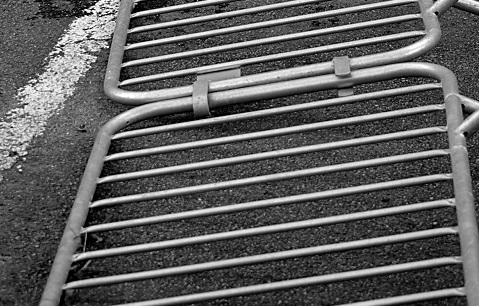
There are various different types of crowd barrier fencing to choose for your event, depending on the kind of celebration you're hosting and the kind of protection you need.
From ropes to metal fences, here at We Are Tricycle we have a wide selection of crowd barriers to help you create a completely safe event for all of your guests.
Our crowd control barriers are a great choice for big parties or events, including crowded outdoor music festivals, school carnivals and local funfairs.
Don't forget about health and safety at your next fairground!
Contact us to find out more about using crowd barrier fencing at any upcoming fairgrounds or funfairs and get in touch for more information about our range of fairground rides and attractions for hire.
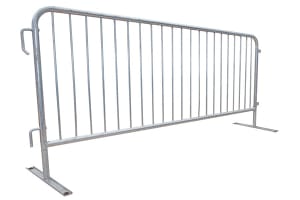
Good Barrier Planning Starts with Understanding How People Will Move
Crowd barrier fencing is most effective when it is planned as part of the event layout rather than added wherever a problem appears on the day. Before deciding where barriers should go, consider how visitors will enter the venue, which attractions are likely to create queues, where staff need access and which areas should remain unavailable to the public.
Our crowd barrier fences can support everything from individual ride queues to larger public event layouts. If you are still deciding where attractions will sit, How to Place Funfair Rides Around the Site is a useful starting point because ride position and pedestrian movement should be considered together.
Create Clear Public and Operational Areas
A busy event can contain spaces intended for very different purposes. Visitors may see a funfair as one continuous site, but behind the scenes there can be operating areas, equipment zones, vehicle routes, staff access points and public spaces that need to remain clearly separated.
Barrier fencing can help establish those boundaries without relying solely on signs or staff instructions. This is particularly useful around big funfair rides, where the operational footprint of an attraction may extend beyond the part that guests actually board.
Build Ride Queues Before the Crowd Arrives
Popular attractions can develop queues quickly. Waiting lines should therefore be considered during the planning stage, including where the queue begins, how it develops as numbers increase and where passengers enter the attraction.
A clearly arranged queue can make it easier for visitors to understand where they should wait while preserving surrounding walkways. For more detailed queue-planning advice, see How to Manage Queues at Funfairs.
This can be particularly important around high-demand attractions such as Giant Ferris Wheel, Modern Dodgems or Star Flyer, where the number of waiting guests can vary considerably during an event.
Do Not Let One Queue Block the Rest of the Event
The busiest ride on the site should not automatically be allowed to consume every nearby walkway. Barriers can help guide a queue into an appropriate footprint while preserving routes to catering, toilets, exits and neighbouring attractions.
Where queues are likely to become part of the visitor experience, organisers can also consider queue busters and waiting area games. Interactive entertainment can give guests something to do while preserving the structured flow created by the barrier layout.
Separate Moving Vehicles from Event Guests
Many large events have vehicle movements during installation and breakdown, and sometimes during operational periods in controlled areas. Delivery vehicles, ride transport, catering units and technical crews may all need access to parts of the venue.
This creates a very different barrier requirement from a ride queue. The aim is to establish a clear distinction between pedestrian areas and controlled operational routes. Our guide to How Are Funfair Rides Transported? provides useful background on the logistical side of moving large amusement equipment between sites.
Think About Barriers During Build and Breakdown Too
Crowd management does not begin when the gates open. During installation, partially assembled equipment, working vehicles and technical operations may need to be kept separate from venue staff, contractors or members of the public who have access to the wider site.
The same applies after the event. How to Assemble and Dismantle Funfair Rides explains more about the build and removal process, while Funfair Ride Set Up and Tear Down Procedures provides related operational information.
Protect Access to Ride Entrances and Exits
An attraction can have several distinct movement points: the queue entrance, loading area, passenger exit and operator access. These should not necessarily overlap.
Appropriate barriers can help guide waiting guests towards the correct entrance and then allow people leaving the ride to move away without walking directly back through the queue. This is especially helpful for roller coasters, dodgems, Ferris wheels and other attractions with regular passenger turnover.
How to Safely Load Funfair Rides looks more closely at what happens when passengers actually reach the boarding stage.
Keep Emergency Routes Available
A barrier layout should never solve one crowd-management problem by creating another. Emergency access, evacuation routes and important site entrances need to remain available as required by the event plan.
Organisers should therefore consider crowd fencing alongside their broader emergency arrangements rather than as a standalone piece of equipment. Funfair Emergency Planning and Crisis Management explores the wider subject, while What to Do in a Funfair Emergency provides related guidance.
Use Barriers to Support Accessible Event Layouts
Crowd fencing should guide visitors without unnecessarily making the event harder to navigate. Routes need to take account of the people expected to attend, including guests who may require more space or step-free access.
Our Disabled Accessibility and Inclusivity at Funfairs & Fairgrounds guide provides further information about inclusive event planning. Considering accessibility while designing the barrier plan can prevent avoidable changes once the site is already built.
Different Events Need Different Barrier Strategies
A corporate event for invited guests is not managed in exactly the same way as a free-entry city-centre festival. Likewise, a school event, wedding or university funfair can have very different visitor numbers, arrival patterns and operating periods.
We provide attractions and supporting equipment for council and local authority events, festival hire, school events, company fun days and corporate events and university and Freshers' Week events. Barrier requirements should reflect the actual venue and event rather than being copied from an unrelated setup.
Barrier Fencing Can Support Games and Ground-Level Attractions Too
Crowd control is not only relevant to mechanical rides. Competitive activities, climbing attractions and interactive games may benefit from clearly marked participation and spectator areas.
For example, a Climbing Wall can require a defined operational area, while popular carnival games or competitive games may develop informal groups of spectators around participants. Thoughtful positioning can help prevent these groups from spilling into neighbouring queues or pedestrian routes.
Combine Barriers with the Rest of Your Event Infrastructure
Large events rarely need one piece of infrastructure in isolation. Barrier fencing can be planned alongside picnic benches, event furniture and decor and other dry hire equipment to create defined activity, catering and rest areas.
This is particularly useful when designing a complete site rather than hiring a single attraction. The objective is to make the layout easy for guests to interpret: where to queue, where to walk, where to sit and which areas are not intended for public access.
Check the Layout Again Once the Event Is Built
Plans drawn before an event are important, but the completed site should also be considered in the real world. An attraction may occupy slightly different space than expected, a route may feel narrower once equipment is present or another feature may change anticipated pedestrian movement.
This is where wider risk-management principles become useful. How to Perform a Funfair Ride Risk Assessment explains how hazards and controls can be reviewed in context rather than treated solely as paperwork.
More Help with Crowd Flow and Funfair Event Planning
If you are designing a busy event site, related reading includes How to Ensure the Safety of Your Guests at Your Funfair, How to Keep Children Safe at Fairgrounds and How We Are Tricycle Protects Your Health And Safety.
You can find more practical planning advice in our Guides section. If you need crowd barriers alongside fairground and funfair hire, rides, games or other event infrastructure, contact us to discuss the venue and expected visitor numbers.