What is the History of the Booster Fairground Ride?
The Booster is a terrifying fairground ride that stands at 40 metres high, and throws riders up and down in a seat with a pendulum-like movement. One moment, you're up in the sky, and the next moment you're riding down to earth at scary speeds, before catapulting back up again. The booster has been a much-loved ride for fairground lovers and funfair regulars for many years.

While generations have been enjoying carousels and Ferris wheels for years and years, this much-loved white knuckle thrill ride is a much more modern invention, and it has been through many designs, innovations and improvements before becoming the fantastic ride we all know today.
The First Booster Rides
The first example of a booster fairground ride was the Roll O Plane, which was designed by the Eyerly Aircraft company in 1938 to help train pilots for the conditions they would need to get used to when flying planes across the world. It's quite an impressive history! The Roll O Plane had two cars on each end of a rotating beam, and it worked in much the same way as the exciting booster that is in fairgrounds today.
This was a thrilling ride for people of the twentieth century, although it was very noisy and not very suitable for busy fairgrounds and funfairs.
Next came the dive bomber, which was a UK version of the Roll O Plane. This was created with a post-war audience in mind, first coming to fairgrounds in 1949 and looking just like the planes and aircrafts people had seen for the past 10 years.
Although this ride was fun for adults and brave children, fairground owners complained that not many people could use it at once. This led to two rides being joined together to seat more avid funfair enthusiasts and increase the amount of people that could enjoy this thrilling ride at once.
The modern booster fairground ride was modelled on all of these fantastic aviation-style fairground ride designs, and modernised for a new audience. The manufacturer Fabbri created the Booster Maxx, which was bigger, faster and could carry a lot more passengers at once. This is the ride that modern riders know and love today, and it brings fun and thrilling entertainment for people of all ages.
The booster is a fun and exciting ride for everyone, and the history of the booster fairground ride is entrenched in science and aviation.
Funfair and Fairground Hire Experts
This fairground ride is a great addition to funfairs and fairgrounds, and here at We Are Tricycle we have a fantastic booster ride to hire for your next event. We can deliver your rental to any location across the UK and we would love to help you create a thrilling and memorable fairground for every generation!
Contact us now for more information, or get in touch to book your next fun fairground rental. Use the below techniques to speak with our team.
Email us at info@wearetricycle.co.uk, or call us on the numbers below.
Birmingham: 0121 293 1377
London: 0203 302 4757
The Booster Changed the Vertical Profile of the Fairground
Many traditional fairground attractions spread their movement around a platform or track. The Booster takes a markedly different approach, sending its passenger gondolas around a tall rotating arm and making vertical movement a major part of both the ride and its appearance.
That places rides such as Booster firmly within thrill & white knuckle funfair rides, where height, speed and large-scale movement can become defining characteristics.
A Thrill Ride Can Be Entertainment for Spectators Too
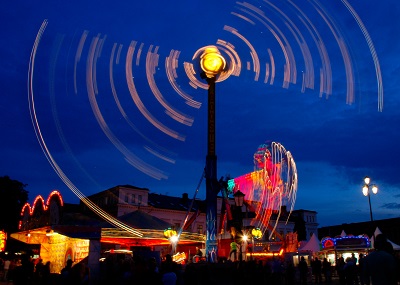
Part of the Booster's fairground presence comes from being easy to watch. People elsewhere on the site can see the arm rotating and the gondolas travelling through the air, so the attraction contributes movement to the wider scene even for visitors who have no intention of riding it.
This gives organisers another consideration when placing funfair rides around the site. The visual relationship between large attractions, pedestrian areas and surrounding entertainment can influence the character of an event.
Height Creates a Very Different Experience from Ground-Level Rotation
Comparing the Booster with other rotating attractions shows how dramatically ride character can change when movement extends vertically. A Waltzer, for example, creates much of its action around its platform, while a Booster uses a tall rotating structure to produce a fundamentally different passenger experience.
What Are the Forces Experienced on a Roller Coaster? provides further background on the forces associated with amusement rides, while How to Cope with Motion Sickness at the Fairground may be useful for visitors who are sensitive to intensive or repeated movement.
Lighting Helps the Booster Command Attention After Dark
Modern thrill rides are often as visually striking after sunset as they are during daylight. Lighting can emphasise the shape and motion of the structure, turning a moving ride into a prominent illuminated feature within an evening fairground.
This is one respect in which contemporary thrill rides differ visually from many traditional & vintage fairground rides & attractions, despite both forming part of the wider fairground landscape.
The Booster Belongs to a Wider Generation of High-Impact Rides
The development of modern fairgrounds has produced numerous attractions that use height, rotation, swinging motion or combinations of these principles in different ways. The Booster is therefore best understood as one member of a much broader family rather than as an isolated ride design.
Super Star, Loop Fighter, Star Flyer and Reverse Bungee demonstrate some of the very different approaches available within modern high-energy fairground entertainment.
Large Thrill Rides Bring Their Own Planning Considerations
A visually dominant attraction still needs to fit the practical requirements of the event. The suitability of any particular Booster or other large ride depends on the specific equipment, venue conditions, access and operating requirements rather than its attraction type alone.
How to Choose the Right Funfair Rides & Games, How Are Funfair Rides Transported? and How to Perform a Funfair Ride Risk Assessment provide useful reading when moving from ride history into event planning.
Compare the Booster with Other Generations of Thrill Ride
Our Guides provide several routes into the development of amusement ride technology. What Is the History of the Miami Funfair Ride? looks at another modern thrill attraction, while What Is the History of the Roller Coaster? follows a very different approach to creating speed, height and changing forces.
You can also browse big funfair rides, view all products or contact us to discuss combining major thrill rides with other attractions for an event.