What is the History of the Miami Funfair Ride?
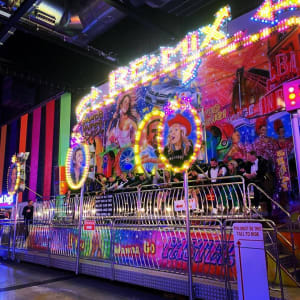
If you're a thrill seeker, no doubt you're already familiar with the Miami funfair ride, also known as the Miami Trip. This compact classic packs a lot of fun into a small footprint, and crowds at carnivals and fairgrounds just can't get enough of sampling the excitement it offers. Wherever it's placed you'll find it quickly attracts a crowd, dazzled by both the excitement the ride offers and the beauty of how it looks.
What is the Miami Trip ride?
Quite simply, the idea behind the Miami Trip hinges on a row of seats twisting clockwise and counter-clockwise through 360 degrees at an ever-changing and erratic pace. The concept of the
white knuckle ride is simplicity itself, and while it doesn't feature the vertigo-inducing thrills of the taller rides you'll find at the fairground, what it lacks in height it makes up for in might! This is because the quick and sharp changes in direction create g-forces which lift riders from their seats and inevitably gets those hands in the air. However, this is all of course done in complete safety, as everyone is firmly held in place thanks to the sturdy safety harnesses.
The small size of this
funfair ride in comparison to
rollercoasters and other amusements also means it's extremely easy to install, pack up and transport. It can be set-up in far tighter spaces than other rides, and it's an absolutely fantastic addition to private parties, product launches,
corporate events and more.
When did the Miami originate?

Compared to some rides, such as the carousel or the Ferris Wheel, the Miami is a relatively new invention. The first iteration of this amusement was built by Dutch showman Gerritt Tegelaa in 1982. However it was not until the early '90s that the original concept was modified so that the row of seats was outward-facing, and this became the template for the Miami as we know and love it today.
Pretty much immediately from its first appearance at fairgrounds in the '90s it was a smash hit, and it quickly became a staple at amusement parks across the globe. It is one of the favourite choices of teenagers, and there are also smaller children's funfair rides that take after the Miami but are a little less hair-raising.
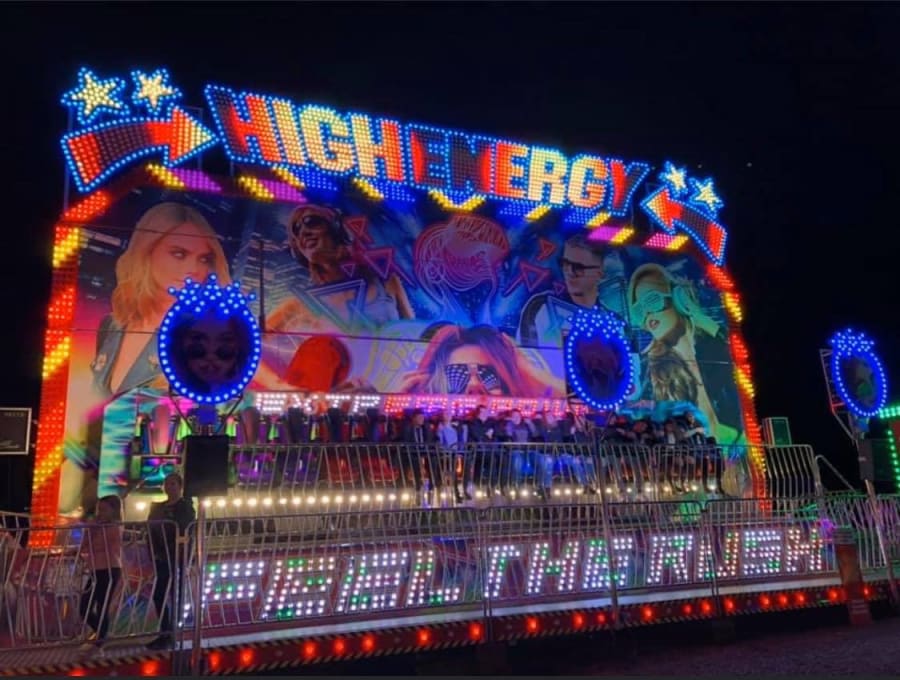
A consistent and always popular feature of Miami is the absolutely beautiful artwork they feature on their backdrops. The large rectangular construction of the Miami means they provide a ready-made fantastic canvas for incredible murals and designs. Often these are painted bright colours, which gives the Miami a really authentic carnival aesthetic. There are numerous examples across the world of artists using their imagination and inspiration to make the rides look their best, and in the UK many of the finest Miami ride murals are painted by Paul Wright.
No doubt this brief look at the Miami has put you in the mood for the unique and dazzling experience they offer, so why not hire one the next time you're organising a party or event? It's sure to be a hit with guests, from the youngest to the not-so youngest!
Where the Miami Fits in the Funfair Ride Family
The Miami has a distinctive place among travelling fairground attractions. Rather than sending individual cars around a track or rotating separate passenger units, the ride places passengers together on a long seating platform and moves that platform through its ride cycle.
This makes it an interesting comparison with other thrill & white knuckle funfair rides, where different mechanical arrangements create very different passenger experiences.
Travelling Fairs Helped Thrill Rides Keep Changing
Fairground ride design has continually responded to demand for attractions that provide more movement, greater visual presence and experiences that contrast with traditional rides. The Miami belongs to this broader development of compact but energetic travelling attractions.
Miami Trip represents the format within our current range, alongside thrill rides such as Freak Out, Super Star and Twister.
The Miami Shows That a Thrill Ride Does Not Need a Track
Comparing ride types is one of the clearest ways to see how fairground engineering has diversified. A roller coaster uses a track, Dodgems give passengers control of individual cars, while the Miami creates its experience through the controlled movement of its passenger platform.
For contrasting examples, How Does a Roller Coaster Work? explains the principles behind coasters, while How Do the Dodgems Work? looks at a completely different form of fairground ride engineering.
Movement and Forces Became Part of the Thrill-Ride Experience
The development of thrill rides is closely connected with the different sensations that controlled acceleration, changes in direction and movement can produce. Ride designs use these principles in different ways, which is why two attractions can feel very different even when both fall within the thrill-ride category.
What Are the Forces Experienced on a Roller Coaster? provides useful background on forces experienced by amusement ride passengers, while How to Cope with Motion Sickness at the Fairground looks at how individuals can respond differently to ride movement.
Modern Operation Is Very Different from Looking Back at Ride History
Historical development explains where rides such as the Miami came from, but present-day operation depends on contemporary inspection, maintenance and operating requirements. An attraction's age or heritage should not be confused with the standards under which it is operated today.
You can read more in How Funfair Rides Are Tested for Safety, Daily Safety Checks for Funfair Rides and Funfair Ride Periodic Maintenance.
Miami Rides Form Part of a Much Wider Thrill-Ride Choice
For event organisers, the Miami is one option within a broad spectrum of high-energy attractions. Different rides vary in movement, capacity, appearance, passenger requirements and practical venue considerations.
How to Choose the Right Funfair Rides & Games looks at selecting attractions for an audience and event, while big funfair rides and thrill & white knuckle funfair rides provide further examples of larger and faster-moving options.
Continue from Miami History into Funfair Engineering
Our Guides explore how familiar fairground attractions developed, how different ride mechanisms work and how modern rides are operated. You can also read What Is the History of the Roller Coaster? to compare the development of a track-based attraction with later travelling thrill rides.
For current ride options, browse all products or contact us to discuss Miami rides and other attractions suitable for your event.