What is the history of the Carousel?
Carousels are one of the most iconic amusement park rides. Also known as merry-go-rounds, roundabouts and hurdy-gurdys, their most famous form involves mountable horses rotating around a central axis. But did you know that, along with rollercoasters, carousels are the oldest funfair rides still in use?
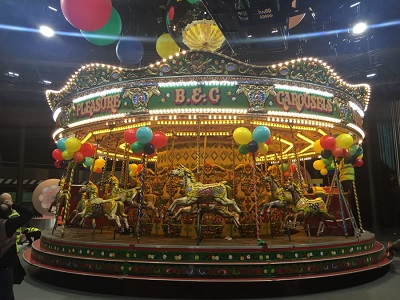
The very earliest carousel rides
The very earliest form of the carousel originated in Europe and the Middle East in the 12th century. Back then it was effectively a military training exercise, and involved soldiers practicing waving their weapons and throwing balls to each other while sat on horses. However, a very important difference between this early carousel and the ones we have today is that the horses they were riding in a circle were real!
It wasn't until the mid-19th century that the carousel in a form we would recognise emerged. By now, these were very similar to merry-go-rounds, and included the platform, the (model) horses and the rotating. However, the main difference from modern carousels is that the motion was generated by manual cranking – either by people or ponies. This carousel quickly became hugely popular at amusement fairs, which only increased in the latter half of the century when the addition of gears caused the horses to move up and down in the motion that we are all familiar with.
The increasing popularity of the carousel in the Victorian age came at the exact same time that leisure activities such as amusement parks, theme parks and funfairs became accessible by more and more people. Increases in wages, and new workers' rights giving more time off, meant that there was now a huge market for entertainment.
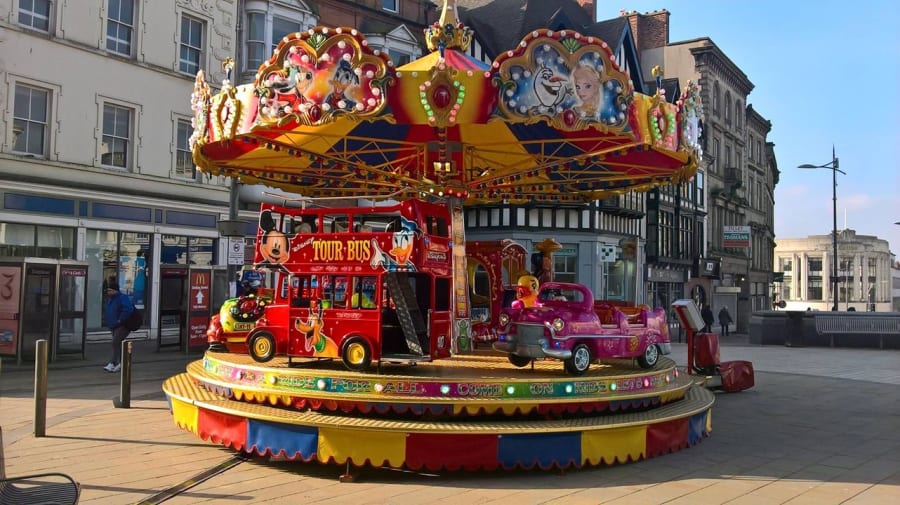
As the 20th century progressed, while the basic mechanism of the carousel stayed the same, there were still innovations. Carousels featuring cars, boats, trains and other forms of transport instead of horses appeared. In addition to this, aluminium and fibreglass as materials to build the carousels replaced the wood of the Victorian models.
The largest carousel in operation today is located at the House on the Rock, Wisconsin. It features a staggering 269 hand-carved animals, 182 chandeliers and more than 20,000 lights. While it remains a popular attraction, the only drawback is that visitors are no longer allowed to ride it!
We Are Tricycle: Carousel and Merry-go-Round Hire UK
Carousels remain a popular feature of funfairs today, and at We Are Tricycle we have a fantastic range to offer you. We have carousels that feature the famous and traditional Victorian look of the early merry-go-rounds, which still look just as great today as they always did. For something different, we also stock carousels where your guests can ride more modern forms of transport, such as our Monster Trucks funfair ride. All of our carousels and merry-go-rounds are of the highest quality available, and are regularly serviced.
Wherever you are in the UK, we are ready to deliver to you now. So why not add the unique look and feel of the carousel to your next event? As we have demonstrated, they've been popular for hundreds of years, and seem likely to remain popular for hundreds more!
Just contact us to get started.
The Carousel Became a Showcase for Fairground Craftsmanship
A carousel is more than a rotating ride mechanism. Traditional examples combine engineering with carved figures, decorative panels, painted details and lighting, giving the attraction a strong visual identity even when it is stationary.
This makes carousels particularly useful for understanding the relationship between amusement ride development and the decorative traditions explored in What Is the History of Fairground Art?.
Carousel Horses Became Symbols of the Fairground
Although carousel designs can feature many different figures and vehicles, the decorated horse became especially closely associated with the attraction. Rows of horses circling the centre created an image that could be recognised immediately as part of traditional fairground entertainment.
Traditional Victorian Carousel retains this classic presentation, while Children's Horse Carousel demonstrates how the horse carousel idea also appears in equipment intended for younger riders.
Decoration Helped Give Individual Carousels Their Character
Traditional fairground operators could use colour, lettering, painted scenes and ornamental details to give attractions their own appearance. On a carousel, these elements surround the entire structure, so artwork becomes part of what spectators see from almost every direction.
That decorative heritage helps explain why traditional & vintage fairground rides & attractions can contribute strongly to the appearance of an event as well as providing entertainment.
Music Became Closely Associated with the Carousel Experience
Sound has long contributed to the atmosphere surrounding fairground attractions, and carousels became particularly associated with musical accompaniment. Combined with repeated circular movement, lights and decorative figures, music helped create an attraction that appealed to people watching as well as those riding.
This broader relationship between entertainment and atmosphere can also be considered when planning vintage events or incorporating additional performance using How to Incorporate Live Entertainment into a Funfair.
The Carousel Design Could Be Reinterpreted for Different Audiences
The familiar rotating platform has proved adaptable. Different carousel-style attractions can use horses, vehicles or other themed figures while retaining the basic idea of passengers travelling around a central point.
Children's Victorian Carousel, Toy Town Merry-Go-Round and Monster Trucks Merry Go Round show how substantially the presentation can change while still retaining connections with the traditional roundabout format.
Traditional Carousels Still Have a Distinct Role at Modern Events
For contemporary event planning, the appeal of a traditional carousel can be partly visual. Its shape, decorative detailing and recognisable silhouette can suit heritage, seasonal and themed environments where the appearance of the attractions matters alongside the ride experience.
How to Make Your Funfair Match Your Event Theme looks at this wider planning consideration, while How to Choose the Right Funfair Rides & Games covers selecting a suitable mixture of attractions.
Explore More of the Fairground's Visual and Mechanical Heritage
The carousel provides one route into a much larger history of traditional amusement rides. What Is the History of Chair-o-Planes?, What Is the History of the Ferris Wheel? and What Is the History of the Dodgems? show how other familiar attractions developed their own distinctive appearances and forms of movement.
More background can be found in our Guides. You can also browse all products or contact us about carousels and complementary attractions for an event.