Carousel Ride Superstitions, Traditions and Rituals
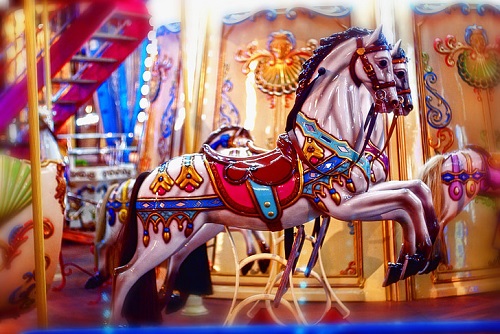
Carousels and merry-go-rounds have been a part of popular culture for centuries, and like many traditions, they've collected their fair share of superstitions over time. Here are some of our favourite carousel-related superstitions:
-
Reaching for the Brass Ring: A popular carousel superstition in the USA involves the "brass ring." Some carousels have a dispenser that releases rings as the carousel turns. Riders try to grab these rings as they pass by. The superstition is that if you manage to grab the elusive brass ring, you'll have good luck or win a prize. This tradition likely originated from the early 1900s when riders could exchange a brass ring for a free ride or other rewards, and has led to the idiom "to grab the brass ring," meaning to live life to the fullest, or to aim for the prize. Although there are many carousels around in the USA, only a handful still have brass rings.
-
Clockwise vs. anticlockwise: Some carousels rotate clockwise (to the right), while others rotate anticlockwise (to the left). Across the Atlantic, carousels spin in an anticlockwise direction, but back home in the UK, they go clockwise. The origin of this tradition harks back to the historical method of mounting real horses. In England, the carousel pays homage to the age-old practice of mounting a horse from the left side. So, when you take a whirl on a British carousel, you'll be circling to the right. This goes back to the history of the carousel as a training tool for cavalry!
-
The Haunted Carousel Horse: At Cedar Point Amusement Park in Sandusky, Ohio, an eerie tale swirls around a haunted carousel horse. This story takes its place on a merry-go-round sculpted by master artist Daniel C. Muller in 1917. Known as Muller's Military Horse, its crimson hue and fierce expression give it an unsettling presence. Having travelled through various parks and carnivals without incident, it was its arrival at Cedar Point when the ghost stories began. Workers claim to have seen a ghostly woman with a soft, ethereal glow riding the funfair ride during the night. Some have even reported unexplained movements and ghostly bites. This apparition might be linked to Mr. Muller's wife, who cherished the horse deeply and was heartbroken when it was destined for the carousel. This carousel has now moved to Dorney Park in Allentown, Pennsylvania - and the ghost has followed!
-
The Cursed Carousel: According to urban legend, a woman embarked on a mission to resurrect her father's carousel, a once-thriving attraction now deemed "cursed" due to a history of accidents culminating in a tragic death. Left dormant for years, the carousel languished in storage, overshadowed by its dark legacy. Her husband proposed a promotional event where he'd ride one of the wooden carousel horses for 100 hours. However, the event takes a chilling turn when the husband claims to have been bitten by the very horse he's mounted, and dies on the spot. Upon closer examination, a venomous snake slides out of the horse's mouth! This serpent, dormant since the carousel's storage days in an Everglades shed, silently resided within, waiting to unleash the curse once more. This urban legend was featured on Beyond Belief: Fact or Fiction!
-
Returning to the Same Horse: Some carousel enthusiasts believe that riding the same horse each time they visit brings good luck. This might be similar to having a lucky seat on a roller coaster. People have their favourite horses - many carousel horses even have their own special names - while other merry-go-rounds might have different animals to ride on, such as unicorns or dragons, that can hold special significance for particular riders.
-
Wishing on the Carousel: As with many things, a common superstition involves making a wish while on the carousel. Some believe you have to make a wish and complete a full rotation while holding onto the pole or reins of the carousel animal, while others say you must wait until the third rotation of the carousel. Either way, your wish will come true! (Allegedly).
While some people take these superstitions seriously, others see them as fun traditions that add to the joy of riding a carousel. There's so much wonder in these endlessly-fascinating funfair attractions - check out our carousel guides and FAQs to find out more!
Carousels Have Inspired Folklore as Well as Fairground History
Carousels have a particularly strong visual identity, with decorated horses, mirrors, lights, music and repeated circular movement. Attractions with such distinctive imagery naturally lend themselves to stories, traditions and superstitions, particularly when generations of visitors encounter similar designs.
For the documented development of the attraction itself, What Is the History of the Carousel? provides a better starting point than attempting to treat every piece of carousel folklore as historical fact.
Is There Really a Lucky Horse on a Carousel?
Stories about a particular carousel horse being luckier, faster or more desirable than the others are part of the folklore surrounding the ride. In practice, decorative differences between horses do not establish that one seat brings its rider better luck.
What they do demonstrate is how strongly individual figures contribute to the personality of a carousel. Traditional Victorian Carousel shows why decorative horses remain such a recognisable part of traditional fairground imagery.
Carousel Horses Can Carry Symbols Without Being Superstitious
Flowers, animals, decorative patterns and elaborate painted details can encourage people to attach meanings to individual carousel figures. It is important, however, to distinguish an interpretation of a symbol from evidence that the original maker intended it as a charm, omen or coded message.
What Is the History of Fairground Art? provides wider context for the painting, lettering and decorative traditions that developed around fairground equipment.
Clockwise and Anticlockwise Stories Need Similar Caution
The direction in which a carousel rotates can also attract theories about tradition or symbolism. Ride direction is better understood in relation to the design of the individual attraction rather than assuming that clockwise or anticlockwise movement carries a universal superstitious meaning.
How Are Funfair Rides Powered? provides a useful route into the mechanical side of fairground attractions and helps separate engineering questions from folklore.
Music and Repetition Can Give Carousels a Ritual Quality
Part of the carousel's cultural appeal comes from repetition. The same circular journey can be taken again and again, accompanied by lights, decoration and music. For families returning to fairs over many years, choosing a favourite horse or recreating an earlier ride can become a personal tradition without necessarily originating as a historical superstition.
This continuing familiarity helps explain why carousels remain strongly associated with traditional & vintage fairground rides & attractions.
Carousel Folklore Has Spread Far Beyond the Fairground
The carousel has become a recognisable cultural image in its own right. Horses and roundabouts appear in photography, artwork, films, seasonal entertainment and themed events, allowing new stories and associations to develop beyond the original fairground setting.
vintage events provides one modern setting where traditional fairground imagery can form part of a wider theme, while photo opportunities shows another way visually distinctive attractions can contribute to an event.
Separate Carousel Stories from Carousel Safety
Superstitions can be entertaining as part of fairground folklore, but they should never be confused with operating requirements. Which seats passengers can use and how an attraction is operated are determined by the individual ride and its applicable requirements, not lucky numbers, favourite horses or traditional beliefs.
What Are the UK's Safety Standards for Fairgrounds? provides wider safety context, while How to Keep Children Safe at Fairgrounds contains related guidance for families.
Follow Carousel Folklore into Fairground Culture
Carousel superstitions sit at the point where mechanical entertainment, decorative art and popular culture meet. Funfair History FAQs provides more routes into fairground heritage, while What Is the History of the Funfair? places individual traditions within the much larger development of travelling entertainment.
You can continue through our Guides, browse carousels and all products, or contact us about traditional fairground attractions for an event.