What is the History of Chair-o-Planes?

One fairground installation that never fails to draw the admiration of onlookers is the Chair-O-Planes ride. You might know it as the 'chair swing ride', or perhaps the 'chair carousel' or 'wave swinger', but whatever name it goes by, the design is a classic: a giant carousel that rises dozens of metres into the air, hung with chairs on chains. Pop yourself into one of the chairs, strap in, and enjoy the sensation of flight as the whole thing rotates at speed. It's a beloved experience that thrills whilst still feeling totally safe - even relaxing!

But when did this amusement park staple first lift off? It might surprise you to know that the modern amusement park has its roots in medieval fairs, going way back to the 1100s. Over time, by the Victorian Age, the fair became a place of fun and entertainment, complete with magic tricks and acrobatics - not too dissimilar to the funfairs of today. Find out more about the history of funfairs here!
The Earliest Chair O Planes
But what we're really interested in are the funfair rides - particularly the traditional Chair-O-Plane. We can trace its ancestors back to to those modernised Victorian fairs, where new mechanical carousels were beginning to prove very popular. The merry-go-rounds we know and love today were actually inspired by jousting tournaments that took place hundreds of years ago, with knights galloping in circles whilst playing catch!
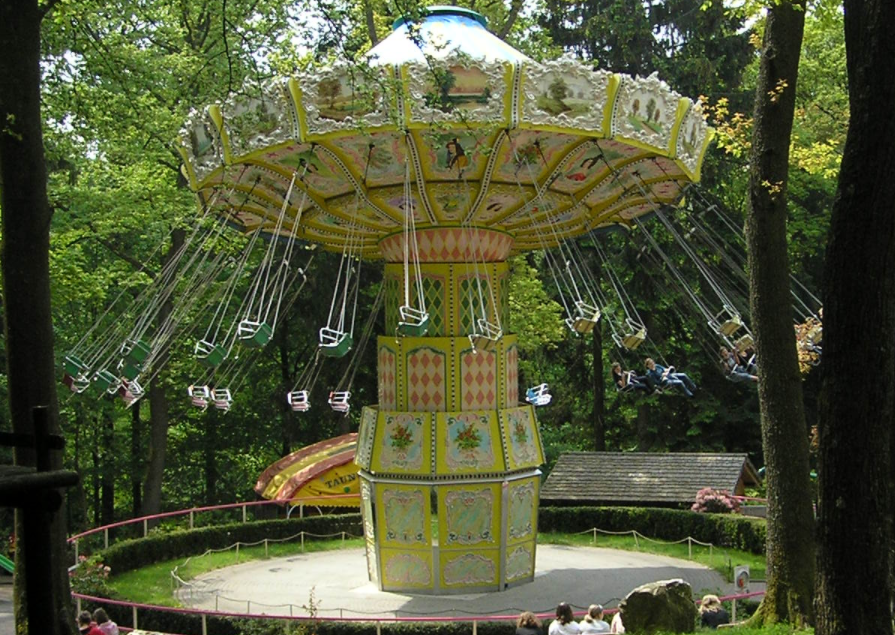
But where do flying chairs come into all of this? Reminiscent of something from Chitty Chitty Bang Bang, the Chair-O-Planes were designed back in 1904 by the inventor Harry Guy Traver. At that time, as leaps were being made in aerial technology, the sensation of flight was a tantalising promise. After all, the Wright brothers had made their famous first flight only a few months previously, in December 1903. The public just couldn't wait to experience life in the air!
And so the new 'Traver Circle Swing' brought that very experience to them. It looks very precarious compared to the slick and secure carousels of the present day, but by all accounts the public loved the ride, and it became a fixed feature of amusement parks for the rest of the 20th century - and right up to today.
Modern Chair O Planes
It wasn't until the 1970s that the first portable set of Chair-O-Planes was designed by Zierer, with a modern version of the funfair ride built by Franz Schwarzkopf in 1972 and a portable version in 1974. Now the possibilities were endless - you could finally bring all the flying fun of the fair right to your own doorstep. As astronauts walked on the Moon, passenger planes approached the speed of sound, and jets achieved accelerations once thought impossible, the Chair-O-Plane ended becoming a much gentler pursuit. By staying the same it managed to adapt perfectly to our joy-seeking needs - the mark of a true design classic. For different reasons, down the decades and across the generations, it has always managed to remain an absolute favourite for the millions that visit amusement parks every day.
As in those heady days in the 1970s, We Are Tricycle can offer you an attractive decorated, portable Chair-O-Planes unit for your venue. We even offer a mini chair o planes funfair ride that is suitable for smaller children.

The Chair-o-Planes Put the Seats Outside the Main Ride Structure
One of the defining ideas behind the Chair-o-Planes is immediately visible: passengers sit in suspended chairs that swing outwards as the attraction rotates. This gives the ride a very different appearance and sensation from attractions where passengers remain within cars or fixed seats attached directly to the rotating platform.
Modern Chair O Planes continue to use this recognisable arrangement, making the ride an interesting example of a historical fairground concept that remains easy to identify today.
Rotation Connects Chair-o-Planes with Other Fairground Classics
Rotating attractions form a substantial branch of fairground ride design, but the passenger experience can change considerably depending on how the seats are mounted and how the ride moves. Comparing a Chair-o-Planes with a carousel demonstrates how two visually traditional attractions can use rotation in distinctly different ways.
What Is the History of the Carousel? explores another important part of this heritage, while What's the Difference Between a Merry-go-Round and a Carousel? looks more closely at terminology surrounding these long-established rides.
The Swinging Chairs Became Part of the Ride's Visual Identity
As the attraction rotates, the suspended chairs move away from the centre. This creates the characteristic circular arrangement associated with Chair-o-Planes and makes the movement itself part of the ride's appearance for spectators.
Traditional Chair-O-Planes represents the classic format, while traditional & vintage fairground rides & attractions contains other rides that can complement this style at heritage and traditional-themed events.
The Same Ride Idea Could Be Built on a Much Larger Scale
Chair-o-Planes did not remain confined to one size or presentation. Larger versions developed that retained suspended seating and rotational movement while creating a much taller attraction with a very different presence on the fairground skyline.
WaveSwinger Chair O Planes provides an example of this larger format, while Star Flyer demonstrates how the suspended-chair principle can be taken into another scale of modern amusement ride.
Smaller Chair-o-Planes Extended the Format to Younger Riders
The same broad attraction concept can also appear in equipment intended for younger passengers. This demonstrates how a recognisable ride family can develop into versions serving different parts of a fairground audience.
Mini Chair o Planes provides one example, alongside the wider selection of children's fairground rides & attractions and small funfair rides. Individual passenger requirements should always be checked for the particular attraction being used.
Modern Ride Choice Goes Beyond Historical Appearance
For an organiser, choosing between traditional Chair-o-Planes, larger suspended-chair rides and other attractions also involves practical considerations such as audience, venue, available space and the overall balance of the event.
How to Choose the Right Funfair Rides & Games provides broader planning guidance, while How to Place Funfair Rides Around the Site looks at incorporating different attractions into an event layout.
Follow the Development of Other Classic Fairground Rides
Chair-o-Planes form one branch of a much larger fairground history. What Is the History of the Ferris Wheel?, What Is the History of the Dodgems? and What Is the History of the Waltzers? provide useful comparisons with attractions based on very different forms of passenger movement.
You can continue through our Guides, browse fairground rides or contact us about combining Chair-o-Planes with other traditional and modern attractions for an event.