The History of the Ghost Train
Ghost trains and funhouses have been scaring people for generations, and they are a fun-filled addition to any fairground or local funfair event. But where did this spooky funfair ride come from, and how has it become a perennial carnival favourite?

The first proper ghost train ride was designed right here in the UK by British architect Joseph Emberton in 1930, and it was very similar to ghost trains that you find in fairgrounds and amusement parks today. This first ghost train was made out of a boxcar on a single rail, and it took passengers on a long route past scary visuals and spooky characters.
Boxcars had been used on rollercoaster-style fairground rides long before this time, but Emberton was the first to think of adding a spooky horror theme to the ride.
Emberton got the idea for this amazing ride from 'pretzel rides' over in the USA. These rides were named after the Pretzel Company, and they took passengers on magical journeys in the dark, showing images of faraway places and exotic destinations.
In the UK, the Pretzel Company was not well-known and so Emberton named his ride after a popular play by the same name.
Emberton created this ghost train ride as an entertainment addition to Blackpool Pleasure Beach, and since then other amusement parks and fairgrounds have built their own version of this scary ghost train. Dreamland in Margate introduced a similar ride, as did Pleasure Beach in Great Yarmouth and Pleasureland in Southport.
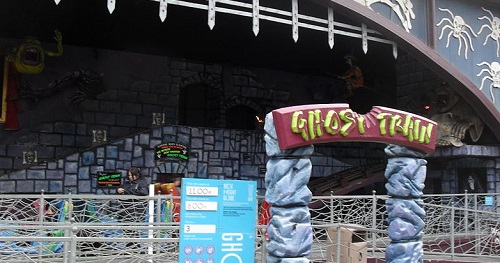
In 1936, Blackpool Pleasure Beach commissioned Joseph Emberton to create an even more impressive ghost train for the amusement park. This new creation had a huge frontage and a rollercoaster-type rail instead of the simple single rail that was part of the original ghost train invention.
In the 1940s and 1950s, ghost trains became very popular with the masses, and they made up a large part of travelling fairs during this time. However, original ghost trains required a large team of people to construct them and take them down again, and by the 1970s, travelling fairs wanted to invest in rides that were easier to construct at each location.
The modern ghost train is very similar to that ride Joseph Emberton first envisioned, with a few modern technological tweaks to delight and entertain young and old at fairgrounds across the UK!
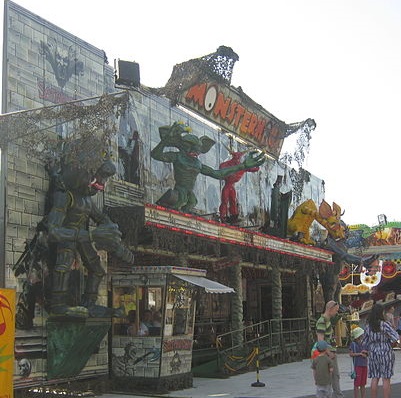
At We Are Tricycle, we have a wide range of amazing fairground rides for hire, including spooky ghost trains, funhouses, traditional fairground rides and modern thrill rides. Our ghost trains are the perfect addition to corporate events, birthday parties, local festivals and family-friendly events of all shapes and sizes.
Find out more about our fantastic ghost trains for hire at your next event or fun local fairground via our website, or contact us to book one of our fairground rides or funfair stalls for your next big celebration.
The Ghost Train Blended a Ride with a Themed Show
The Ghost Train is unusual because the passenger experience depends on more than movement alone. Riders travel through a themed environment where darkness, scenery, sound and surprise all contribute to the attraction.
This places ghost trains somewhere between a conventional ride and a theatrical experience, with the ride system carrying passengers through a sequence of scenes rather than simply providing motion for its own sake.
Dark Rides Created Their Own Kind of Fairground Storytelling
A Ghost Train does not need a complex plot to create atmosphere. The route itself provides a beginning, middle and end, with riders encountering different effects as the car progresses through the attraction.
Ghost Train is a current example of this format, while Haunted House and House Of Terror show how similar ideas can also be used in attractions where visitors move through the environment in a different way.
Scenery Became Just as Important as the Ride Mechanism
The visual identity of a Ghost Train is a major part of its appeal. Painted façades, themed interiors, lighting and props help establish the experience before the ride has even started.
What Is the History of Fairground Art? provides wider context about the decorative traditions associated with fairground attractions, while carnival decor shows how visual theming continues to shape modern events.
Sound and Surprise Help Create the Haunted Atmosphere
Unlike an open-air ride where visitors can usually see much of the mechanism and route, an enclosed Ghost Train can control what passengers see and hear. Darkness and timed effects allow the attraction to reveal each scene only as the ride progresses.
This use of controlled environments links Ghost Trains with other themed entertainment such as Halloween parties & events and Halloween fairground rides.
The Ghost Train Shares Its Heritage with the Fun House
Ghost Trains and funhouses developed as different attractions, but both rely heavily on themed environments, visual effects and the visitor's progression through a sequence of features.
What Is the History of the Fun House? provides a useful comparison, while What Obstacles Are in a Fairground Fun House? looks at how a walkthrough attraction creates entertainment without using the same ride format as a Ghost Train.
Modern Haunted Attractions Can Mix Old and New Effects
The basic Ghost Train format has remained recognisable, but the effects used inside themed attractions can change with technology. Lighting, audio, mechanical props and digital elements can all be incorporated without removing the central idea of travelling through a haunted environment.
themed events and electronic & digital games show two very different ways in which modern event entertainment can combine physical surroundings with newer technology.
Ghost Trains Still Add a Different Experience to a Funfair
For event organisers, a Ghost Train offers something that contrasts strongly with open mechanical rides, games and food stalls. It can therefore help create a broader entertainment mix rather than simply adding another ride with similar movement.
How to Choose the Right Funfair Rides & Games looks at balancing different attraction types, while fairground rides provides a wider view of the options available.
Continue Exploring Haunted and Historic Fairground Attractions
Our Guides cover the history, mechanics and traditions behind many familiar fairground attractions. You can also read What Is the History of the Funfair? for the broader background to travelling fairground entertainment.
For current event options, browse all products or contact us to discuss Ghost Trains, Halloween attractions and complementary rides and games.