The History of the High Striker Test Your Strength Machine
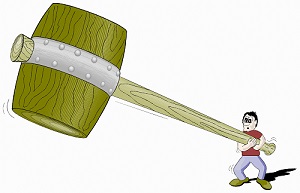
The Test Your Strength machine, often a staple at funfairs and carnivals, has a storied history that dates back to the late 19th century. Known for its appeal to those wanting to demonstrate their physical prowess, this iconic arcade machine has evolved over the years, both in design and reputation.
The first strength testing machine was patented by Richard Page in 1885. This early version laid the groundwork for what would become a classic attraction in amusement areas and arcades. It was a simpler time for entertainment, with such machines offering novel and straightforward ways for individuals to test and prove their strength.
By the early 20th century, with the rise of cinema and the declining costs of film projection, the entertainment landscape began to shift. In 1906, the American Mutoscope and Biograph Company, known for its Mutoscope machines and films, stopped production, significantly impacting the arcade industry. Arcades, which had relied heavily on Mutoscope machines, now had to pivot towards other attractions, including strength testers, shockers, and other funfair stalls and carnival games, to draw in crowds.
The 1930s saw a more challenging era for the Test Your Strength machine. During this period, some operators of these machines resorted to less scrupulous practices. They would often rig the machines to prevent even the strongest individuals from being able to ring the bell. This practice was aimed at exploiting young men, who, in an attempt to avoid embarrassment, would repeatedly try and fail at the game. The operators would manipulate the game further by eventually allowing the player to ring the bell, thus maintaining the allure of the game for other potential players. However, this seediness was exposed by Popular Mechanics in a 1935 article, leading to a decline in such practices.
Following the exposure of the shady behaviour of Test Your strength operators, the High Striker and other strength testing machines have largely operated without such manipulations. These amusement machines have retained their popularity by offering a fun and competitive way to test one's strength at fairs, carnivals, arcades, and other areas of high footfall.
From its inception in the 19th century to its evolution through the 20th century, the Test Your Strength machine has been a reflection of the changing landscapes of entertainment and technology. Today, it stands as a nostalgic and beloved challenge, a symbol of the traditional funfair experience. At We Are Tricycle, we celebrate the historical significance of such attractions by offering fairground side stalls and games that include modern versions of these classic strength testers, ensuring they continue to be a cherished part of amusement experiences. Contact us to book your spot!
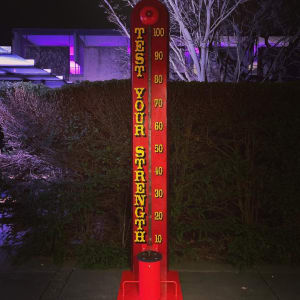
From Fairground Strength Test to a Recognisable Carnival Game
The High Striker sits within a much wider tradition of fairground games built around simple actions that spectators can immediately understand. While rides became larger and more mechanically complex, games based on strength, aim, accuracy and skill remained an important part of the fairground.
Our fairground side stalls and games show how many of these traditional formats continue to be used alongside modern attractions.
The High Striker Is Part of a Much Bigger Skill-Game Tradition
Testing strength is only one way fairground games invite visitors to participate. Other long-established formats rely on throwing, hooking, knocking down targets or placing objects accurately.
Hook A Duck Side Stall, Tin Can Alley Side Stall, Hoopla Side Stall and Coconut Shy Side Stall represent different branches of this tradition. You can find more examples within our skill games and carnival games.
Why the High Striker Works So Well in Front of a Crowd
Part of the attraction of a High Striker is that other people can watch the attempt and immediately understand what is happening. That gives Test Your Strength a spectator element as well as making it an activity for the person taking part.
This same principle can be seen in other games where a score or result is visible to friends, colleagues and other visitors. competitive games contains further options for events where friendly competition forms part of the entertainment.
Strength Games Now Sit Beside Reaction Games
Modern event entertainment has expanded the idea of testing physical ability. Instead of measuring only strength, interactive equipment can test speed, reactions, coordination and timing.
Batak Pro, Chaos Strike A Light | 4 Player and Catch It - Reaction Ring Game provide very different examples. Our reaction games bring together more activities based around quick responses.
Traditional Fairground Style Still Has a Place at Modern Events
The High Striker's association with traditional fairs makes it particularly useful when organisers want entertainment with an established fairground character. It can sit alongside traditional & vintage fairground rides & attractions, traditional stalls and carnival decor to help establish the setting.
Ideas for Traditional Fairground Rides provides further inspiration for events drawing on classic fairground entertainment, while How to Decorate Events in a Carnival Style looks more closely at the visual side of the event.
The Basic Fairground Challenge Has Adapted to New Audiences
Traditional games are no longer restricted to travelling fairs. Their short playing times and straightforward formats mean they can also form part of company fun days and corporate events, school events, charity events and festival hire.
For organisers choosing between different types of attraction, How to Choose the Right Funfair Rides & Games looks at matching entertainment to the audience, venue and event format.
Follow the History of Other Fairground Favourites
The High Striker is only one attraction within a much longer fairground story. Our Guides explore the development, engineering and traditions behind many familiar attractions, including What Is the History of the Roller Coaster? and the wider history of travelling funfairs.
You can also browse Hook A Duck, Hoopla, Tin Can Alley and other traditional games, or contact us about combining classic and modern fairground entertainment for an event.