What are the Different Types of Rollercoaster?
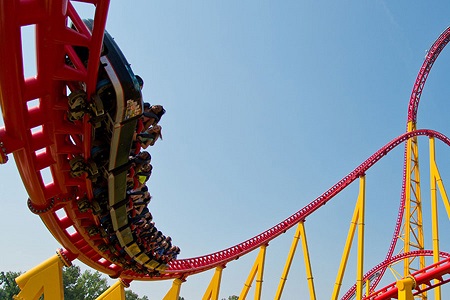
Roller coasters, for many people, are the pinnacle of the fairground, the attraction most anticipated that people often leave to the end to be the highlight of their night. Some love them so much that they’ll hop off it and re join the queue to go again! With all the high-tech roller coasters that are seen across the globe, one would be forgiven for thinking that they are a recent feature of the funfair. However, would you believe that the first recorded instance of a roller coaster is way back in the 17th century! Read more if you'd like to explore the history of the roller coaster.
Over these hundreds of years, many different variations of roller coaster have been born and We Are Tricycle have a great variety of them. Some of the oldest wooden roller coasters still exist today, with the Big Dipper in Blackpool and Scenic Railway in Margate both over a century old.
We thought we’d provide you with a concise little guide to some of the of roller coasters you might encounter at the funfair. Keep us in mind for funfair hire!
Wooden Roller Coasters
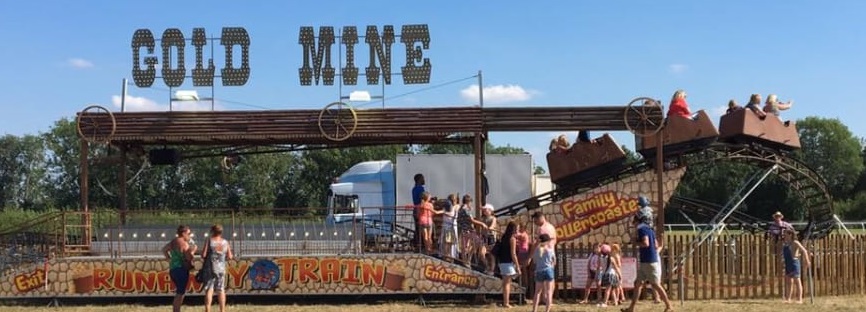
The traditional roller coaster is still found at Britain's historic beach resorts today. The clicking of the tracks is something you don’t forget once you’ve heard it and the craftsmanship that has gone into each corner and even the carriage are a sight to behold in their own right. You’ll be surprised at how much of a white knuckle ride these old things can be; its no wonder some of them have been thrilling crowds for over a hundred years!
Steel Roller Coasters
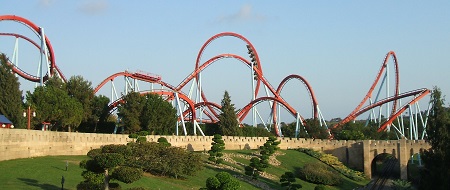
The most common material to build most rides out of is steel because it’s so strong. More strength means more ability to take stress, which means you can achieve greater speeds, sharper corners and even loops. From really high-octane rides to simple ones, you’ll find steel is the material of choice for many modern rollercoasters, as it’s easier to bolt together than wood and doesn’t weather. Almost all of the biggest and boldest roller coasters with numerous twists, turns and loops will be of this type.
Ghost Trains
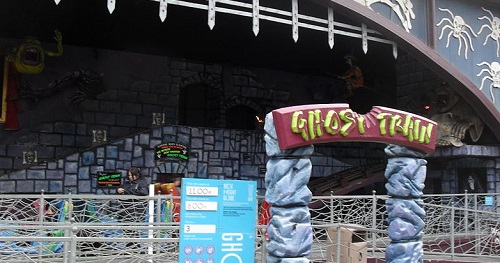
Ghost trains are roller coasters with a twist! Taking place inside a panel casing, the emphasis of the ghost train isn’t always on speed but on the features around the carts. Sometimes the scariest bit is ironically when the cart is moving at it’s slowest, lingering near a spooky part of the ride before turning the corner onto a final dip! A huge hit and not just for Halloween, horror fanatics are everywhere, ghost trains are a beloved feature of the travelling funfair and carnival. Why not read about the history of the ghost train?
Children's Roller Coasters
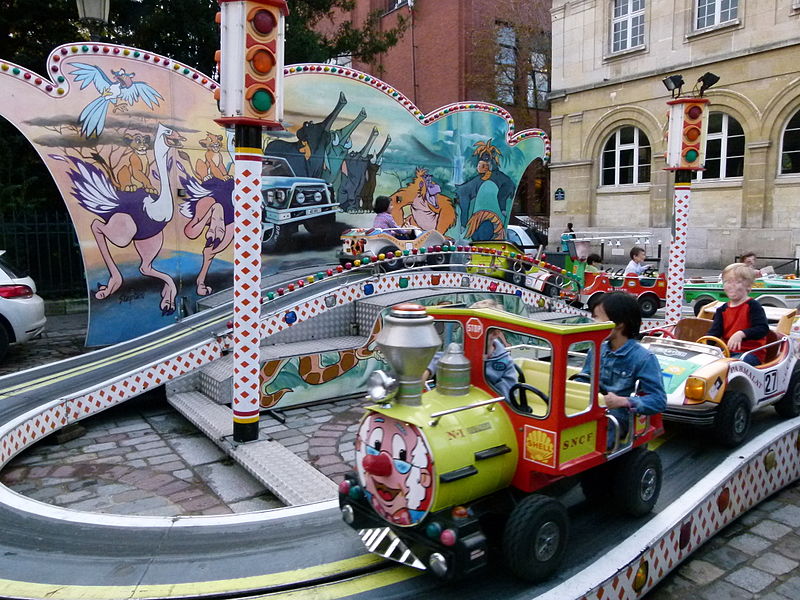
We all need to start somewhere! Kids love to take a first spin on a simple roller coaster that may just have a few light dips around a loop. Often decorated like a caterpillar or a dragon, these children's funfair rides capture the imagination and even really young ones can find them thrilling. A brilliant way for kids to build up their confidence for bigger rides too.
We Are Tricycle have a wonderful range of roller coasters so check them out now and find the perfect one for your event.
There Is More Than One Way to Classify a Roller Coaster
Roller coasters are often divided into familiar types, but there is no single classification system that explains every design. One coaster might be described according to its track construction, another by the position of its passengers, and another by the particular movement or experience it creates.
This is why apparently different coaster categories can overlap. How Does a Roller Coaster Work? provides useful engineering background for understanding what these different designs still have in common.
Track and Train Design Can Both Define the Coaster
Some roller coaster descriptions focus on the structure beneath the train, while others concentrate on how passengers are positioned relative to the track. These are separate characteristics, so a coaster can potentially belong to more than one descriptive group at the same time.
What Is the History of the Roller Coaster? provides the historical context for how roller coaster engineering developed from earlier designs into a much broader family of attractions.
Movement Creates Another Set of Roller Coaster Types
Coasters can also be distinguished by what happens after the train begins moving. Drops, banking, rapid changes of direction and inversions can produce very different experiences even when two attractions share other design characteristics.
What Are the Forces Experienced on a Roller Coaster? explains what passengers can experience as direction and speed change, while How Do Rollercoasters Go Upside-Down Without Falling Off? looks specifically at inverted track elements.
Not Every Roller Coaster Is Built for Maximum Intensity
The term "roller coaster" covers attractions intended for very different audiences. A large thrill coaster and a compact children's coaster may use the same broad idea of vehicles following a track while providing substantially different experiences.
mini & children's roller coasters includes smaller examples, with attractions such as Go Gator Children's Roller Coaster and Train Rollercoaster Ride demonstrating how the coaster format can be adapted for younger audiences.
Travelling Roller Coasters Have Their Own Practical Requirements
Roller coaster design can also be influenced by where and how an attraction will be used. Equipment intended for a travelling fair has to form part of a mobile operation, making transportation, assembly and temporary event-site planning important considerations alongside the passenger experience.
How Are Funfair Rides Transported? looks at the movement of travelling equipment, while How to Set Up and Tear Down Funfair Rides provides related information about temporary ride installations.
Different Coaster Designs Can Feel Different from Different Seats
The train itself introduces another variable. Where somebody sits can alter their view of the track and, depending on the coaster design and track element, can influence how parts of the ride feel.
What Is the Best Seat on a Roller Coaster? looks at front, middle and rear seating in more detail without treating any one position as universally superior.
Coaster Type Does Not Replace Individual Passenger Requirements
Broad labels such as children's, family or thrill coaster should not be used to predict an individual attraction's passenger requirements. Height restrictions, seating arrangements, restraints and other conditions depend on the particular equipment and its operating requirements.
Why Do Some Funfair Rides Have Height Restrictions? explains why restrictions exist, while How to Stay Safe on Roller Coasters covers wider passenger guidance.
Compare Roller Coasters with the Wider Fairground Ride Family
Roller coasters form only one branch of mechanical fairground entertainment. Compare roller coasters with Ferris wheels, Chair O Planes and thrill & white knuckle funfair rides to see how differently fairground attractions can create height, speed and movement.
For further reading, Rollercoaster FAQs answers more common coaster questions, while our Guides cover fairground engineering, history, safety and event planning. You can also browse all products or contact us about roller coasters and other attractions for an event.