The History of the Trampoline
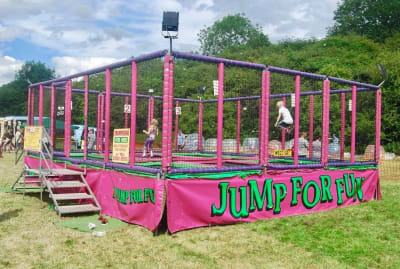
Trampolines are a regular fixture at family festivals, local events, fairgrounds, funfairs and more! Everyone loves to have a fun bounce on a trampoline trailer or a bungee trampoline, and these amusements and toys have been entertaining and delighting people of all ages for decades.
The Earliest Trampolines
The first concept of a trampoline came all the way from Pablo Fanque's Circus Royal in the early 19th century. This circus featured amazing performances from trapeze artists and acrobats on a springboard type apparatus. It doesn't sound quite as comfortable as the modern trampolines that we use today!
These early examples of the trampoline helped performers push themselves even higher up in the sky, and they could perform mesmerising jumps and tumbles as part of their performances.
However, it wasn't until 1936 that the first modern trampoline model was finally created. This model was built by George Nissen and Larry Griswold, and they used "trampolin", the Spanish word for diving board, as their inspiration for the name. These men were avid tumblers and gymnasts, and they were both students at the University of Iowa at the time.
Nissen and Griswold experimented by stretching canvas to an angle iron frame, using coiled springs to make it as bouncy as possible. It looked very similar to the trampolines that we use at funfairs and fairgrounds today.
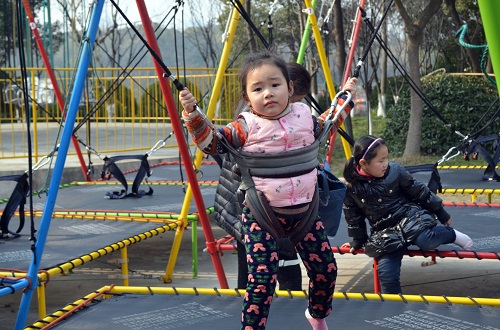
In 1942, these trampoline inventors created the Griswold-Nissen Trampoline and Tumbling Company. This original trampoline design was first used to train amateur tumblers, but trampolines soon became super popular as a form of fun entertainment for the whole family, and toy trampolines or amusement trampolines began to emerge for household purchases.
By the early 1960s, outdoor commercial "jump centres" or "trampoline parks" were becoming more and more common in America. These parks featured multiple trampolines for adults and kids to use at once, but unfortunately many of these jump centres had to close down due to poor safety regulations. It seems that they didn't have the same up-to-date health and safety codes and regulations as we use today!
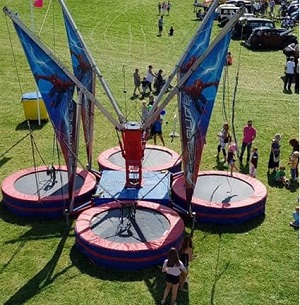
These trampoline parks made a comeback in the 21st century, and these new, innovative trampoline centres included wall to wall trampolines to reduce falls and accidents, as well as innovations such as bungee trampoline trailers. Is there anything better than a room covered in trampolines?
The History of Funfair & Carnival Amusements and Toys
Here at We Are Tricycle, we love to celebrate the long history of the fairground rides we hire out every single day.
We have a wide range of trampolines for hire at your next fairground or funfair, and they are just as exciting and popular as they were when Griswold and Nissen first came up with their amazing design.
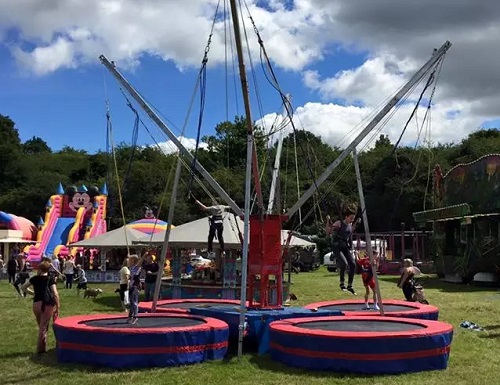
Choose our trampoline trailers for your next children's funfair, or entertain people of all ages with our bungee trampolines. Guests will feel like they're flying! Thrill-seekers can experience an even more intense bungee experience with our Reverse Bungee!
Contact us now to find out more about our wide range of reliable funfair, fairground and carnival products for hire across the UK, or get in touch to book our fun-filled trampolines for your next celebration.
One Simple Idea Developed in Several Directions
The history of the trampoline does not end with the development of the modern apparatus. The same principle of using an elasticated surface to propel a participant upwards has subsequently found a place in sport, leisure facilities and mobile event entertainment.
That makes trampolining an interesting example of how an activity can move between organised sport and popular entertainment while retaining a recognisable basic form.
Trampolining Became a Sport as Well as Recreation
Modern trampolines are used for much more than casual bouncing. Trampolining developed into a structured gymnastic discipline in which participants perform controlled aerial movements, making technique and body control central to the activity.
This sporting side of trampolining places it alongside other physical activities that have also been adapted for events. Our adventure activities and sports games provide examples of the wider range of active entertainment now available.
The Trampoline Principle Also Changed Fairground Entertainment
Trampolines eventually became another form of attraction that could be incorporated into fairs and events. Rather than relying on a moving ride vehicle, the participant creates much of the movement themselves.
6 Bed Trampolines provide a multi-user event format, while bungee trampolines combine bouncing with a harness and bungee system to create a different type of attraction.
Bungee Trampolines Took Bouncing in Another Direction
The addition of bungee equipment created a distinct attraction based partly on familiar trampoline movement but with a different operating system and participant experience.
How Do Bungee Trampolines Work? explains the mechanics in more detail, while Bungee Trampolines x4 shows how the concept can be provided as a multi-station event attraction.
Modern Events Mix Trampolines with Other Active Attractions
Trampolines no longer have to form a standalone activity. Event organisers can combine them with other physical entertainment to create a broader programme in which visitors can bounce, climb, play games or try different activities.
inflatable attractions, Why Artificial Climbing Walls Are Safer to Climb and extreme sports simulators provide related reading and entertainment options for organisers considering an activity-led event.
Trampolines Have Their Own Place Within Funfair History
Traditional fairgrounds have continually incorporated different forms of entertainment rather than relying exclusively on mechanical rides. Trampolines illustrate this particularly well because the attraction is based primarily on the participant's own movement.
They can therefore provide a contrast to big funfair rides, small funfair rides and children's thrill rides within a larger event programme.
From Trampoline History to Modern Event Planning
If the history of trampolines has prompted you to look at how other attractions developed, our Guides cover the history, engineering and operation of many familiar forms of fairground entertainment. What Is the History of the Roller Coaster? provides a contrasting example of an attraction whose development followed a very different technological route.
For current event options, browse all products or contact us to discuss trampolines, bungee trampolines and other active entertainment.