How to Win at Draughts
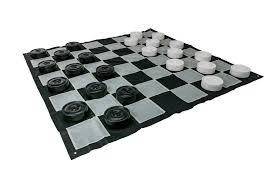
We all know how important it is to beat your best friend, sibling or friendly enemy when playing Draughts. It can really make or break a party if you are hailed as victorious or you have to congratulate your opponent with a thinly veiled grimace on your face.
We Are Tricycle has Giant Draughts among our collection of Giant Garden Games, and so we have created a blog filled with amazing tips on how to win at draughts or checkers! Read on to find out exactly how to make sure you (almost) always have your hand raised in victory!
Checkers, while the smaller cousin of the more stoic and daunting chess, is a very strategic game. Rushing quickly into moves will unusually always mean certain defeat. The first piece of strategy we can impart is to learn to control the centre of the board. Avoid the temptation to rush to the sides because you can't be jumped there. This is a foolish strategy. This is because the aim of the game is to attack and win, rather than remain safe. By getting to, and controlling the centre, you can launch more attacks. You have four directions to move in, which means more potential pieces to claim pieces!
Common sense tells us It's important to protect the King's rows. This means simply not moving the back pieces. However, this means you are severely limited in the moves you can make, you'll run out of moves with the other eight pieces, meaning you will either make a silly move or be forced to move a piece from the king's row. The other reason is this allows your opponent to advance nine, ten or eleven pieces against your eight. You will always be outnumbered when employing this tactic, meaning you're asking for trouble.
A final piece of advice would be to always have an excuse ready for when you sense you are losing. An appropriate excuse, sharp exit and draw is always a better outcome than a devastating loss!
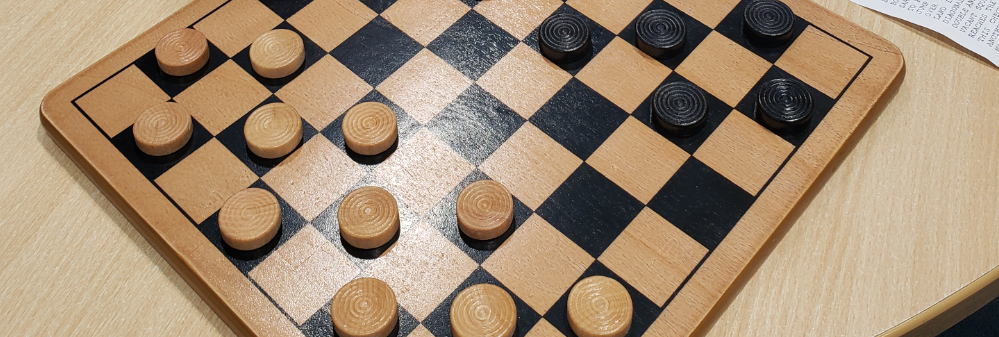
Winning at Draughts Starts with the Position, Not Just Captures
Taking an opponent's piece can be useful, but draughts is also a game of positioning. A move that captures immediately is not necessarily the most useful choice if it leaves important pieces exposed or gives the opponent a stronger reply.
Giant Draughts turns the familiar board game into a larger event activity, while Giant Chess provides a related strategy game with a very different set of pieces and possibilities.
Keep Your Pieces Supporting Each Other
Isolated pieces can become easier for an opponent to attack. Keeping pieces in positions where they support one another can reduce the number of easy opportunities available to the other player and make it harder for them to progress through the board.
This emphasis on planning several moves ahead distinguishes draughts from many skill games, where the result may depend on a single throw, strike or attempt.
Look at the Opponent's Reply Before Making Your Move
Before moving a piece, consider what the new position allows the other player to do. This is particularly important when captures are available, because a seemingly useful move can sometimes create an opportunity for an opponent to respond with another capture.
Players who enjoy this type of decision-making may also be interested in What is the History of Chess?, which explores the background of another board game built around positional choices and forward planning.
Do Not Treat Every Exchange as a Loss
Sometimes allowing pieces to be exchanged can improve the overall position. The important question is what the board looks like afterwards. An exchange may open a route, remove a troublesome opposing piece or simplify the game when one player already has an advantage.
That makes draughts particularly suitable for competitive games, where participants can compare approaches rather than relying on physical performance alone.
Reaching the Far Side Changes the Game
Getting a piece to the opposite end of the board is important because promotion gives that piece greater freedom of movement under the rules being used. Players therefore need to balance attacking the opponent with preventing opposing pieces from progressing towards promotion.
When playing at an event, check the rules provided for the particular game before starting, especially if participants are accustomed to different draughts or checkers variants.
Use the Edges and Open Spaces Deliberately
The value of different positions changes as pieces disappear from the board. Early play can be relatively compact, while later stages provide more open space and greater opportunities for advanced pieces to move. Successful players adjust their approach rather than using the same strategy throughout the game.
For another oversized game where the position changes with every turn, Giant Connect 4 provides a contrasting challenge based on pattern recognition rather than captures.
Giant Draughts Can Work as a Social Competition
The large format makes it easy for other people to follow the board and discuss possible moves. At corporate events, school events and activity days, games can be played casually or organised into short competitions depending on the available time and audience.
garden games contains further large-format activities, while How to Plan a Team Building Day provides related guidance for combining different challenges within a group event. icebreaker games can provide additional options where the objective is to encourage interaction between participants.
Mix Strategy with Other Types of Event Challenge
Draughts does not test the same abilities as reaction machines, throwing games or physical challenges. Including it within a broader games selection can therefore give participants who prefer tactical and thoughtful activities another way to take part.
Giant Jenga introduces balance and judgement, while reaction games and multiplayer games provide contrasting forms of competition. Organisers can also browse all products, continue through our Guides, or contact us about building a varied games programme.