Why is the Coconut Shy called the Coconut Shy?
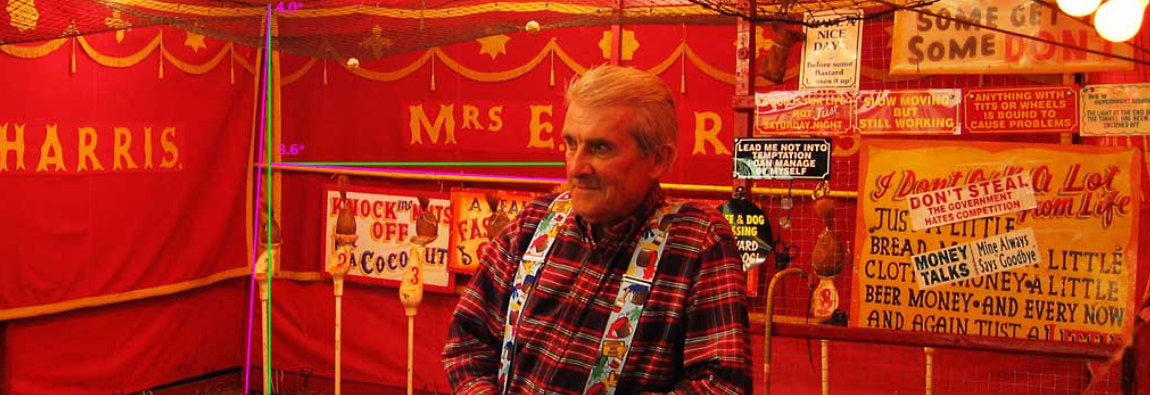
The Coconut Shy, one of the world's most beloved fairground games, has been entertaining crowds for generations, and at We Are Tricycle, we offer coconut shies and other funfair stalls for hire to bring this nostalgic and exciting experience to your event.
But have you ever wondered what the etymology of Coconut Shy is? Why would this stall be called a 'shy'? Our fairground experts examine the facts.
Coconut Shy Etymology
You might think that shy means "timid" or "easily startled," but it also has a lesser-known meaning that refers to throwing or tossing an object at a target. The word 'shy' from an old English word 'scie' which means 'to fear'. Over time, this word evolved into its modern meaning, and its thought that 'shy' to mean 'throw' comes from the same root word, although the exact relationship is still uncertain,
Therefore, the name 'Coconut Shy' originated from the nature of the game itself. Participants are given the task of knock coconuts off their stands by throwing, or 'shying', balls and beanbags.
Dislodge the coconuts from their perches by hitting the target and with precision and accuracy. Typically, successful participants would win a coconut as a prize. Back in Victorian days, coconuts were very lucrative and sought-after! It's thought the first Coconut Shy appeared back in 1867 at Kingston-upon-Thames, and was a twist on an old pub game called 'Aunt Sally'.
For more information about the Coconut Shy and other funfair games, check out our funfair games and stalls FAQs! Discover the fascinating history, rules, and tips for various classic carnival games, including the Coconut Shy.
Speak with We Are Tricycle today to inquire about our fairground rides and funfair stalls for hire! Just visit our contact page to see how to get in touch.

The Important Word in Coconut Shy Is "Shy"
To modern ears, "coconut shy" can sound like a rather strange name. The word "shy" is not describing a timid coconut. In this context, it relates to throwing or making an attempt at a target, which helps explain how the familiar fairground game acquired its name.
The terminology belongs to a much wider tradition of target-based fairground side stalls and games, where a simple action and an obvious objective make the activity easy for passing visitors to understand.
Throwing at a Target Became Part of the Name
The basic idea behind a coconut shy is immediately visible: the player throws at coconuts positioned as targets and attempts to knock them from their stands. The name therefore describes the distinctive combination of the target and the throwing game.
Coconut Shy Side Stall continues that familiar format as part of the traditional fairground games available for modern events.
Fairgrounds Have Their Own Vocabulary
Coconut shy is a good example of how fairground language can preserve terms that are less familiar in everyday conversation. Historic fairs developed names for attractions, games and equipment that could remain in use even as the events themselves changed.
What Is the History of the Funfair? provides the wider background, while Funfair History FAQs explores other questions about how British fairground traditions developed.
The Coconut Is What Makes This Shy Immediately Recognisable
Many fairground games involve throwing an object towards a target, but changing the target creates a different game identity. The coconuts are therefore not a minor decorative detail. They are the feature that distinguishes the coconut shy from other traditional throwing stalls.
Compare it with Down A Clown Side Stall, Ball In Milk Churn Side Stall and Tin Can Alley Side Stall. Each uses a different target or objective while retaining the immediate appeal of a straightforward fairground skill game.
Simple Game Names Help Explain the Challenge Quickly
Traditional side-stall names often work because visitors can quickly connect the name with what they see in front of them. This remains useful at busy events, where an activity may only have a short time to catch somebody's attention and communicate how it is played.
What Is the History of Hoopla? provides another example of a traditional fairground game whose familiar name became closely associated with a particular type of challenge.
Coconut Shy Belongs to a Wider Family of Accuracy Games
The game's identity may be historic, but the principle behind it remains familiar. A player is given an attempt, aims at a clearly defined target and can immediately see the result. Similar principles appear throughout skill games and prize games.
Other fairground challenges put different abilities at the centre. What Is the History of the High Striker Test Your Strength Machine? looks at a strength-based attraction, while What Is the History of the Buzz Wire Game? examines a game based much more closely on precision and controlled movement.
Traditional Stall Ideas Can Also Be Reworked for Different Events
The continuing appeal of simple target games has allowed the wider side-stall format to be adapted into different themes. The objective can remain immediately understandable even when the targets, artwork and surrounding presentation change.
seasonal funfair stalls shows how traditional game principles can be adapted for particular times of year, while carnival games provides further options built around familiar fairground-style participation.
Read More About the Language and Traditions of the Fairground
The coconut shy is only one example of a familiar attraction whose name carries part of its history. What Is the History of Fairground Art? explores another part of traditional fairground identity, while our Guides cover the rides, games, engineering and customs associated with fairs.
You can also browse fairground side stalls and games, skill games and all products, or contact us about traditional fairground games for your event.