What is the history of Whack a Mole?
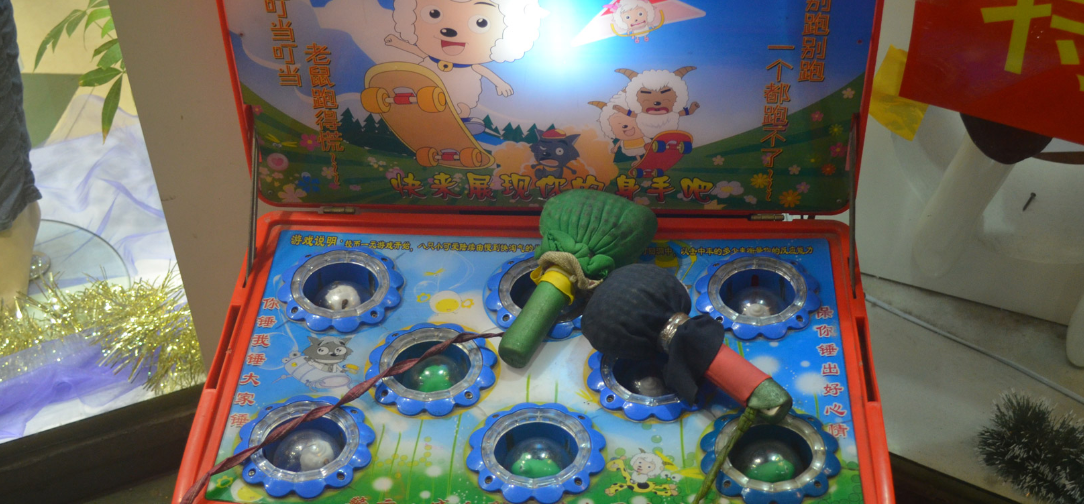
The iconic arcade game 'Whack a Mole' has delighted generations with its simple yet captivating gameplay. Known for the thrill of whacking emerging moles with a mallet, its history is as interesting as the game itself. Let's delve into the origins and evolution of this classic arcade staple.
The game that would become known as Whack a Mole originated in Japan in 1975 under the name モグラ退治 (Mogura Taiji, literally “Mole Extermination”). Created by Yamada Hazuo, the President and Representative Director of Togo Co., Ltd., this game was an innovation in amusement arcade gaming. Hazuo, born on July 28, 1920, joined the Togo Entertainment Machine Manufacturing Co., Ltd., at the age of 18 and quickly rose through the ranks to lead the company.
The first 'Mole Killer' machine, as it was initially known, featured a U-shaped field. By the following year, the design was altered to a semi-circular field, allowing players to hit the moles without turning side-to-side. This design change significantly enhanced the gameplay experience.
In 1976, 'Mogura Taiji' made its North American debut at the International Association of Amusement Parks and Attractions (IAAPA) show. It caught the attention of Gerald Denton and Donny Anderson, who saw its potential as a carnival game. They introduced the game to Aaron Fechter, who developed a prototype with significant modifications, including the addition of air cylinders for a more dynamic mole movement and creating the first example of this retro arcade game. Fechter is credited with coining the name "Whac-A-Mole."
After further refinements by Bob Cassata, founder of Bob's Space Racers, the game began being sold in 1977. It quickly became the most popular game at exhibition shows, pinball parlours, and eventually in the carnival, amusement park, and coin-op arcade markets by 1980.
'Whack a Mole' became a major hit, gaining immense popularity not only among children but also as a fun activity for young adults. Its appeal lies in its simplicity and the universally enjoyable challenge of testing reflexes and timing.
Today, 'Whack a Mole' continues to be a beloved part of the arcade gaming world. Its legacy is seen in various iterations and adaptations in arcades and funfairs around the world.
'Whack a Mole' remains a testament to the enduring appeal of simple, fun, and engaging arcade games. To add this timeless classic to your next event, explore our range of fairground side stalls and games at We Are Tricycle, or contact us for more information!
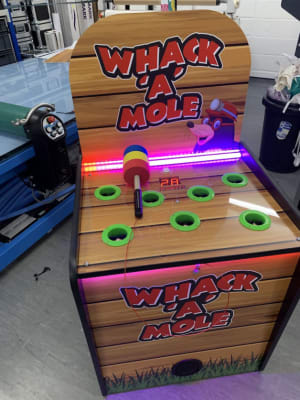
Whack a Mole Is Built Around an Immediate Game Loop
The basic appeal of Whack a Mole comes from how quickly one action leads to the next. A target appears, the player responds and attention immediately moves elsewhere. There is very little downtime between understanding the objective and attempting it.
This places the game within the wider development of reaction games, where changing prompts keep the participant actively watching and responding throughout the attempt.
Unpredictability Keeps the Player Watching
If every target appeared in an obvious sequence, much of the challenge would disappear. Changing target positions forces the player to keep scanning the playing area rather than simply repeating the same movement.
This provides an interesting comparison with What Is the History of Batak?, where illuminated targets also direct the participant towards changing points of activity, although the equipment and style of play are quite different.
A Simple Objective Leaves Room for Faster Play
Whack a Mole does not depend on a complicated ruleset. Once players understand that appearing targets need a response, they can concentrate on timing and speed rather than remembering a sequence of instructions.
That contrasts with the controlled movements explored in What Is the History of the Operation Game? and What Is the History of the Buzz Wire Game?, where avoiding an error can be just as important as completing the task quickly.
Scoring Gives Every Attempt a Clear Ending
A numerical result turns a short burst of activity into something players can compare. One person can try to improve a previous score, while several participants taking turns can create an informal leaderboard without changing the fundamental game.
This scoring principle connects Whack a Mole with competitive games and single player games, allowing individual play to generate a wider competition between participants.
The Game Is Entertaining for People Waiting Their Turn
Whack a Mole also has a strong spectator element because the objective is visually obvious. People nearby can see targets appearing, follow the player's responses and understand when an opportunity has been missed.
That characteristic is useful when planning queue busters & waiting area games or icebreaker games, where an activity may need to engage more people than the participant currently playing.
The Whack a Mole Idea Can Be Reinterpreted
A recognisable game mechanism does not have to remain tied to one presentation. Different equipment can alter the scale, styling and event context while retaining the central idea of reacting to targets as they become available.
Whack A Mole provides a current event-hire version, while electronic & digital games shows how electronic systems have broadened the range of fast-response entertainment available for modern events.
Compare Whack a Mole with Other Fairground Skills
Looking at related games shows how many different abilities can form the basis of a short attraction. What Is the History of the High Striker Test Your Strength Machine? centres on force, while What Is the History of Hoopla? leads into the tradition of aiming and throwing games.
Our Guides cover further histories of fairground and interactive entertainment. You can also browse skill games, multiplayer games and all products, or contact us about games for an event.