Refusing Access to Funfair Rides
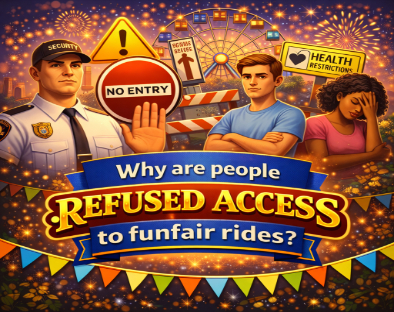
For many of us, a trip to the funfair is a cherished memory from childhood, filled with the excitement of rides, the taste of candy floss, and the thrill of winning prizes at the fairground side stalls. However, almost everyone has faced the disappointment of being refused access to a funfair ride at some point - especially when they were too short to ride!
While it may have seemed unfair or upsetting at the time, there are several important reasons behind these decisions, all aimed at ensuring the safety and enjoyment of all guests. We look at some of the most common reasons below.
-
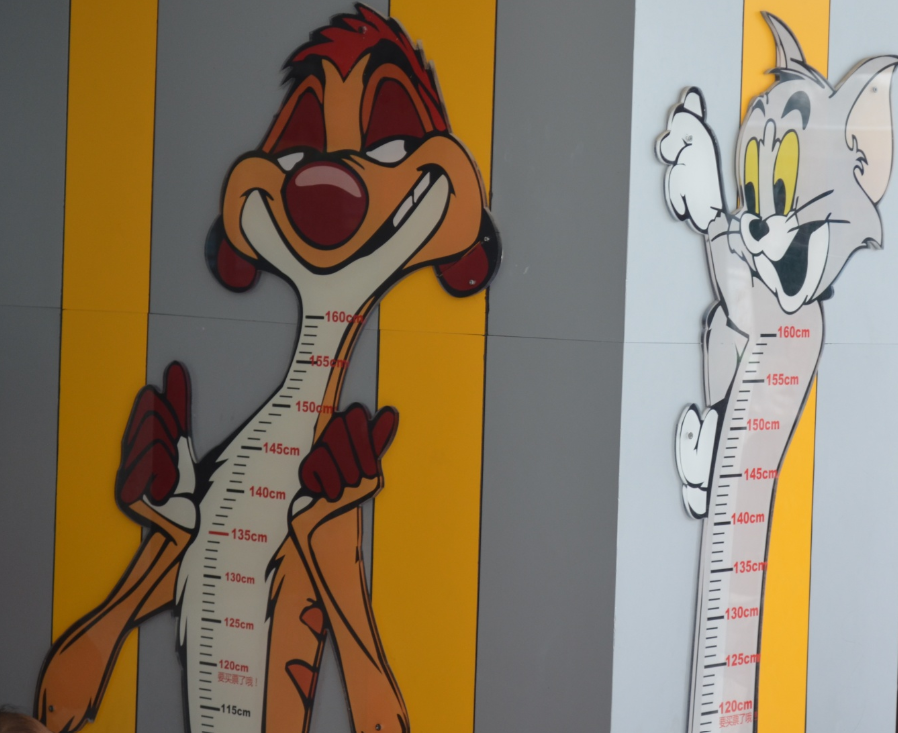
Height and Size Restrictions: One of the most common reasons for being turned away is not meeting the height requirement. Funfair rides - not just thrill rides but even children's fairground rides - often have minimum height limits to ensure that passengers are safely contained within the ride. Similarly, there can be maximum size limits to ensure that safety restraints can be properly secured. These restrictions are to prevent injuries.
-
Health and Safety Considerations: Funfair staff are trained to identify individuals who may be at risk if they use certain rides. This includes those with visible injuries or conditions, such as back or neck problems, heart conditions, or pregnant individuals. The intense movements or forces exerted by some rides can exacerbate these conditions, posing a significant risk to rider's health and safety.
-
Inappropriate Behaviour: Guests behaving inappropriately or showing signs of aggression can also be refused access. Such behaviour can endanger all users of the ride as well as fairground staff. It's crucial for a fun and safe environment that all visitors respect the rules and each other.
-
Influence of Drugs or Alcohol: Being under the influence of drugs or alcohol significantly impairs judgment and physical coordination. Riding amusement devices in this state increases the risk of accidents for the individual affected as well as for everyone around them. Therefore, if you are visibly inebriated, you can expect to be refused entry to all your favourite rides. It might be best to save it for the evening!
While being refused can be disappointing, it's important to remember that these decisions are made with the best interests of all visitors in mind. Fairgrounds and amusement parks aim to provide a safe, enjoyable experience for everyone, which sometimes means making tough choices. Respecting the decisions of ride operators and understanding the reasons behind them helps maintain a positive atmosphere for all attendees.
Being turned away from a funfair ride is a rite of passage we've likely all experienced, serving as a reminder of the importance of safety in these environments. Next time you visit, remember these rules are for your benefit. Take refusals graciously, and help ensure that the fun continues for all!
Why a Ride Operator May Sometimes Have to Say No
Being refused access to a funfair ride can be disappointing, especially when someone has queued for an attraction and expected to take part. However, ride operators have to make decisions based on the safe operating requirements of the individual amusement device, not simply on whether a customer wants to ride.
Restrictions can relate to height, restraint fit, physical suitability, behaviour, intoxication, medical considerations or other ride-specific factors. Our guide to why some funfair rides have height restrictions explains one of the most visible examples, while Funfair Ride Health Restrictions and the Equality Act looks at the more complex relationship between safety requirements and accessibility.
Restrictions Can Vary from One Ride to Another
There is no single set of passenger criteria that applies identically to every attraction. A Traditional Victorian Carousel, Modern Dodgems, Pirate Ship and Booster operate in very different ways, with different restraint systems, motions and rider positions.
That means a guest who can safely use one attraction may not necessarily meet the operating requirements for another. This is particularly relevant at events containing a mixture of children's fairground rides and attractions, family funfair attractions and rides and thrill and white knuckle funfair rides.
Height Limits Are About the Ride, Not the Person
Height restrictions are generally connected to the design of the attraction and the way its restraints or seating work. They should not be viewed simply as an arbitrary rule imposed by the operator at the entrance.
For parents and event organisers, How Tall Do Children Have to Be for Fairground Rides? provides additional information about ride-height requirements. How to Keep Children Safe at Fairgrounds also covers wider considerations when younger guests are attending an event.
Accessibility Does Not Mean Ignoring Safety Requirements
Inclusive event planning should aim to remove unnecessary barriers wherever reasonably possible, but accessibility and ride safety still have to be considered together. The appropriate approach is not to assume that a disabled guest can or cannot use an attraction simply because of a disability.
Our Disabled Accessibility and Inclusivity at Funfairs & Fairgrounds guide looks at accessibility from the wider event perspective. For more detail on the legal and operational considerations surrounding individual rides, see Funfair Ride Health Restrictions and the Equality Act.
Operators Need to Make Decisions in Real Time
Some decisions cannot be made solely from paperwork before an event begins. Operators may need to assess whether a passenger can be seated correctly, whether a restraint can be secured as intended or whether behaviour creates an immediate safety concern.
This is one reason competent operation remains important even where a ride has undergone appropriate inspection and testing. Daily Safety Checks for Funfair Rides explains the routine checks carried out around operation, while How to Safely Load Funfair Rides looks more closely at the boarding process.
Behaviour Can Affect Access Too
Ride restrictions are not limited to physical characteristics. A person whose behaviour could place themselves, the operator or other passengers at risk may also be refused access or asked to leave an attraction.
The exact response depends on the circumstances, but safe operation has to take priority over keeping every individual customer satisfied. Organisers can read How to Ensure the Safety of Your Guests at Your Funfair for a broader look at visitor management.
Event Layout Can Reduce Difficult Conversations
Clear information before guests reach the loading platform can make access rules easier to understand. Appropriate signage, visible queue arrangements and staff communication can reduce situations where a rider only learns about a restriction after waiting for a long period.
Our How to Manage Queues at Funfairs and How to Use Crowd Barrier Fencing at Events guides provide useful information for organisers planning busy attractions and public-facing events.
Risk Assessments Should Consider Rider Access
Access restrictions can form part of a much wider risk-management process. An event organiser may need to think about who is expected to attend, the types of attractions being supplied, how information will be communicated and whether alternative activities are available for guests who cannot use a particular ride.
How to Perform a Funfair Ride Risk Assessment explains the broader process of considering hazards and control measures, while UK safety standards for fairgrounds provides useful context on the wider safety framework.
Offering Alternatives Can Improve the Visitor Experience
A well-balanced event does not rely on every visitor being able or willing to use every ride. Guests who cannot use a particular attraction may still be able to enjoy fairground side stalls and games, garden games, arcade game machines, mini golf or other lower-intensity activities.
This is especially useful at council and local authority events, school events, charity events and other gatherings with a broad audience. Building variety into the event from the outset can make the overall experience more inclusive without compromising the operating requirements of individual rides.
More Guidance on Ride Safety, Access and Passenger Suitability
If you are researching why access can sometimes be refused, several related pages provide useful context. Are Funfair Rides Safe? gives a broad overview, Health and Safety FAQs answers common safety questions and How We Are Tricycle Protects Your Health And Safety explains our own approach to safe event delivery.
You can also browse the wider Guides section for information about testing, risk assessment, accessibility, weather, loading and event planning. If you are arranging funfair hire and need advice about suitable attractions for your audience, please contact us.